Ranipur Jharial (Balangir)

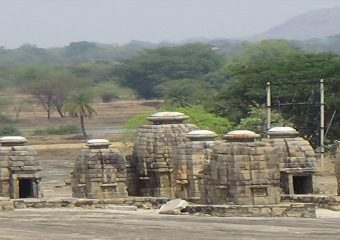
In the scriptures, Ranipur Jharial is referred to as “Soma Tirth.” It is a synthesis of the religious faiths of Saivism, Buddhism, Vaisnavism, and Tantrism. Sixty-four Yoginis are worshipped on a close circular open vault. The main attraction of the location is one of four such shrines in India. Among the approximately 50 temples here, the temple devoted to Lord Someswar Siva is the most well-known.
According to historians, the Somavanshi Keshari kings built numerous temples in Ranipur-Jharial dating back to the 9th/10th century AD.
How to reach?

The shrine of the presiding god of 64 Yoginis is located 104 kilometers southwest of Balangir town.

By Air
Swami Vivekananda International Airport in Raipur (201 km) and Biju Pattnaik International Airport in Bhubaneswar are the closest airports (248 K.M). A new airport is being built in Jharsuguda’s industrial development (179 kilometers) and the nearest airstrip is in Jamadarpali (135 K.M).
By Road

Balangir can be reached by bus or train. By bus or taxi, one can travel from Balangir to Ranipur-Jharial.

Ananta Vasudeva Temple

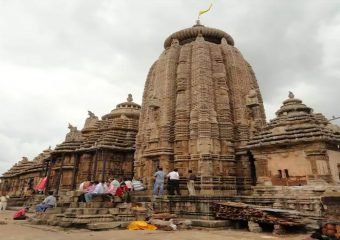
Ananta Vasudeva Temple is a prominent Hindu temple located on the eastern bank of Bindu Sarovar in Bhubaneswar, around 4.5 kilometers from Bhubaneswar Railway Station, Odisha in India, dedicated to Lord Krishna, an avatar of Lord Vishnu. The temple was built in the thirteenth century, and it has the entire murtis of Krishna, Balarama, and Subhadra. Balarama stands beneath a seven-hooded serpent, while Subhadra holds a jewel pot and a lotus in her two hands, her left foot resting on another jewel pot, and Krishna wields a mace, chakra, lotus, and conch. The temple was built during the time of King Bhanudeva during the reign of Chandrika Devi, the daughter of Anangabhima III. In the British Museum’s collection, there is a commemorative inscription that marks the temple’s foundation.

The original image of Vishnu appears to have been worshipped on the site of Ananta Vasudeva’s grand temple, which was built in the 13th century A.D. In the 13th century, Queen Chandrika of the Eastern Ganga dynasty was inspired to build a new temple – the temple of Ananta Vasudeva – in this location. This Vishnu image had to have been installed in an old temple. The Marathas, who extended their empire to the Mahanadi River, were in charge of renovating the Vishnu temple in Bhubaneswar in the late 17th century.

The temple is similar to the Lingaraj temple in appearance, but it has vaishnavite (Lord Vishnu-related) sculptures. The temple includes longitudinal bands of miniature shikharas (shrines) that are identical to those found at Lingaraj temple, with the exception that the number of shikharas forming one longitudinal band is only three in this case. Each temple in Bhubaneswar has a different kind of sculpture on the outer walls. The majority of female statues on the temple walls are extremely ornate and unoriginal.

Unlike the images of the Jagannath Temple in Puri, the idols discovered in the garbhagrha (sanctum sanctorum) of the temple have complete structure. Unlike the Puri temple, the shrimurtis (idols) here are made of black granite stone rather than wood. The city is known as Chakra kshetra (round place) only because of this temple, whereas Puri is known as Shankha kshetra (curved place).

Brahmeswara Temple

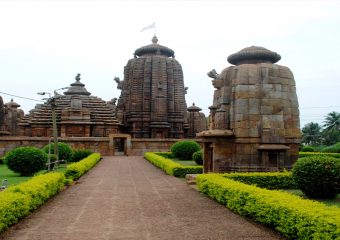
Brahmeswara Temple is a Hindu temple dedicated to Shiva. This Temple is located 5 kilometers from the Bhubaneswar Railway Station Odisha, India. It was built at the end of the 9th century CE and is richly carved on the inside and outside. The use of inscriptions that were originally on the temple allows us to date this Hindu temple fairly accurately. They are now lost, but records of them have been preserved, preserving information from around 1058 CE. The temple was built by his mother Kolavati Devi in the 18th regnal year of the Somavamsi king Udyotakesari, which corresponds to 1058 CE.

Historians place the temple to belong to the late 11th century, as evidenced by an inscription brought from Bhubaneshwar to Calcutta. The temple was built by Kolavatidevi, the mother of Somavamsi king Udyota Kesari, according to the inscription. It was constructed with four Natyasalas in Ekamra at a location known as Siddhatirtha (modern-day Bhubaneswar). The inscription was discovered in the 18th renal year of Udyotha Kesari, which corresponded to 1060 CE. Because the inscription is no longer in its original location, historians speculate that it may refer to another temple, but based on the location and other features specified, it is determined that the inscription belongs to the temple. Another point raised by Panigrahi is that the four cardinal temples are Angasalas (associate temples) rather than Natyasalas (dance halls) as the inscription indicates.

The temple is classed as a panchatanaya temple because, in addition to the main shrine, there are four minor shrines located in the temple’s four corners. In comparison to its predecessors, the temple has a perfectly developed construction due to its later origin. The temple’s vimana is 18.96 meters (62.2 feet) tall. [2] The temple was constructed using conventional architectural methods of wood carving but on stone. The structures were constructed in the shape of a full-volume pyramid, then carved on the inside and outside. The property is 208.84 square meters in size, while the temple is 181.16 square meters.

Chausath Yogini Temple (Hirapur)

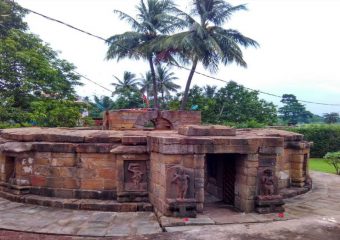
Hirapur’s Chausath Yogini Temple (64-Yogini Temple), also known as Mahamaya Temple, is 20 kilometers from Bhubaneswar, the state capital of Odisha in Eastern India. It is dedicated to the worship of the yoginis, goddess-like beings who are considered auspicious.

The aspect of Religious:

The yogini temple in Hirapur is a tantric shrine with hypaethral (roofless) construction because tantric prayer rituals include worshipping the bhumandala (environment made up of all five elements of nature – fire, water, earth, air, and ether) and yoginis who are thought to be capable of flight. The yogini idols depict female figures standing on the heads of animals, monsters, or humans, symbolizing Shakti’s victory (Feminine power). Rage, grief, pleasure, joy, desire, and happiness are all expressed by the idols. In Hindu mythology, the number 64 appears in various forms, such as Klá for time, Kal for performing arts, and so on. Yogini temples can also be found in Ranipur-Jharial in Odisha’s Balangir region, as well as seven other locations in India.

History:
Queen Hiradevi of the Bramha dynasty is thought to have built the temple in the 9th century. According to local priests, the Goddess Durga took the form of 64 demi-goddesses to slay a demon at the temple. The 64 goddesses, who are equated with yoginis, begged Durga to build a temple in their honor after the battle. The Archaeological Survey of India now looks after the temple complex. Kalapahad, a 16th-century Muslim general who converted to Christianity, is said to have stormed this temple and destroyed the Murtis. He is infamous for destroying the temples of Puri and Konark.

Architecture:

The temple is modest and circular, with a diameter of only 25 feet. It’s hypaethral and made of sandstone pieces. The circular wall includes niches on the inside, each containing a Goddess statue. Sixty-six of the sixty-four black stone idols have survived. They encircle the temple’s primary figure, Goddess Kali, who stands atop a human head, symbolizing the triumph of the heart over the mind. According to some historians, the Chandi Mandapa once housed a Maha Bhairava idol. The temple appears to be built on a mandala layout, with concentric circles forming around a Shiva in the inner sanctum, who is encircled on all sides by four Yoginis and four Bhairavas. The temple’s plan has the shape of a yoni-pedestal for a Shiva lingam, with the circle accessible via a projecting entrance tunnel. Standing goddesses and their animal carriages are shown in the Yogini pictures (vahana). The Yoginis are completely naked except for their bejeweled girdles, from which hang thin skirts that serve as light ornamentation on their legs; they wear bracelets, armlets, necklaces, and anklets. The yogini images are 40 cm tall and made of dark chlorite rock, standing in various poses on plinths or vahanas, their animal vehicles; most have “delicate features and sensual bodies with slender waists, broad hips, and high, round breasts,” with varying hairstyles and body ornaments, according to scholar István Keul.