


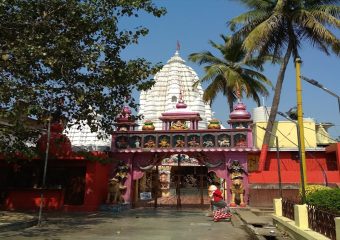
Maa Pataneshwari Temple is a Hindu temple located in Kamlibazar, Sambalpur, Orissa. The temple is within the city limits of Sambalpur. The temple is dedicated to Maa Patneshwari, an incarnation of Goddess Kali. Goddess Patneshwari is the presiding deity of the Patna Kingdom. She is also known as the sister of Samaleswari.
Maa Patneshwari Temple was built in the late 16th century by Balram Dev ( the first Chauhan ruler of Sambalpur), in the heart of the city, formerly known as Patnagarh. The sanctum within which the deity Maa Pataneshwari is established is circular in design; the presiding deity, who is an incarnation of Goddess Kali, is very influential and plays a pivotal role among the people of Orissa.
The temple has vibrant architectural details throughout, from the entry gates to the shrine where the Goddess resides. When entering the temple, one can see the craftsmen’s meticulous work and small idols of different incarnations of the Goddess all over the entrance. More designs of mermaid-like creatures can be found on the front gate, which is symmetrical on both sides.

Ghanteshwari Temple
Maa Ghanteshwari temple is currently located in Chiplima, Odisha, India, 30 kilometers from Sambalpur via NH 6. A bridge (called the Chaurpur bridge) is being built at Mundoghat, a strategically important location between Sambalpur and Chiplima. It is fully operational as of December 2018. The distance between Maa Ghanteswari Temple and Sambalpur has been cut in half. There are bells everywhere, as the name implies. Following the fulfillment of their wishes, people offer bells to the goddess Ghanteswari, also known as the Deity of Bells. The temple attracts pilgrims from all over the state. It is known as the ‘lighthouse without light,’ as it was built by early mariners to act as a warning against strong winds. A large number of little bells hung all around adds to the significance of this location.
Maa Ghanteshwari Temple is located on the bank of the Mahanadi River, 33 kilometers (21 miles) southwest of the district capital Sambalpur. The Chipilima Hydro Powerplant (CHEP) is located on the same riverbank as the temple.


Debrigarh wildlife sanctuary
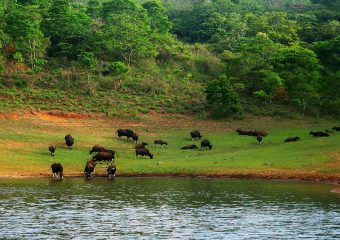
The Debrigarh wildlife sanctuary is a 346.91 km2 wildlife sanctuary located in the Bargarh district of Odisha, India. It is located near the Hirakud Dam in Sambalpur. The Debrigarh Wildlife Sanctuary is a vital site for the preservation of native wildlife and their habitat. It is home to a wide variety of vegetation and wildlife. More than 40 mammalian species, 12 amphibian species, 200 bird species, 40 reptile species, 42 fish species, 39 odonates species, 85 butterfly species, and 38 spider species live in the sanctuary.
The massive Hirakud reservoir runs across the sanctuary on the east and north sides. It’s one of the state’s few sanctuaries that supports both terrestrial and aquatic biodiversity, as well as a large number of migratory waterfowl throughout the winter, and over 250 plant species, many of which have ethnobotanical and medicinal significance.
From an ecological and environmental aspect, the Debrigarh Wildlife Sanctuary is an Eco-sensitive Zone, and some enterprises or classes of businesses, as well as their operations and processes, are restricted within the Eco-sensitive zone.
How to reach?
Debrigarh is located 289 kilometers from Bhubaneswar and can be reached by road or train from Sambalpur, from which you can book a cab. Sambalpur has a railway station, and Jharsuguda has an airport. Debrigarh Nature Camp is located 40 kilometers from Sambalpur and is accessible via the dam’s right dyke from Sambalpur and Hirakud townships.
Satkosia
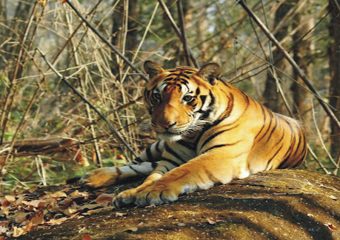
Satkosia is without a doubt one of Odisha’s most stunning ecosystems. It is a tiger reserve and a breeding center for freshwater crocodiles, gharial, and muggers, as well as having a spectacular gorge across the River Mahanadi. The Baisipalli Sanctuary is a short distance away. The Satkosia Tiger Reserve is made up of two wildlife sanctuaries: Satkosia Gorge and Baisipalli, which are spread across four districts: Angul, Nayagarh, Cuttack, and Boudh. The tiger reserve covers an area of 963.87 square kilometers, but the core area is only 523.61 square kilometers..
Tikarapada, Chhotakei, and Purunakote are the three entrance sites of Satkosia. Freshwater turtles such as Chitra indica and Aspidiretes gangeticus, as well as enormous gharials and muggers lazing in the sun on the riverbank, can be seen while boating in the authorized region of Mahanadi towards the gorge. The river is flanked on both sides by beautiful mountains. Even though there are forest rest homes in Chhotakei and Purunakote, the 10 eco-tents in Tikarpada, which are maintained by a group of tribal youths from Tikarpada village employed by the forest department for the purpose, are the most beautiful lodging units in Satkosia.


The youths are extremely friendly and helpful; they not only maintain the tents and lead guided nature treks through the forest, but they also cook for the visitors. They catch freshwater fish from the river on request and cook them in an open kitchen for visitors. Tourists can visit Tikarpada’s Gharial Research and Conservation Unit, which raises young sub-adult gharials in captivity. The Satkosia Wildlife Division has established a similar facility in Tarava village, where local communities host nature enthusiasts. Reservations for the forest rest houses and eco-tents can be made at www.satkosia.org. The Satkosia eco-system is approximately 200 kilometers from Bhubaneswar, which has the closest airport link. If traveling by road from Bhubaneswar, take the NH-6 to Cuttack and then the NH-42 to Dhenkanal and Angul. To enter Satkosia, obtain a permit at the Divisional Forest Office in Angul and then proceed to Pampasar, the main entry gate. To visit Satkosia, you must first obtain a permit from the Divisional Forest Office in Angul, then travel to Pampasar, the main entry gate.