Baitala Deula

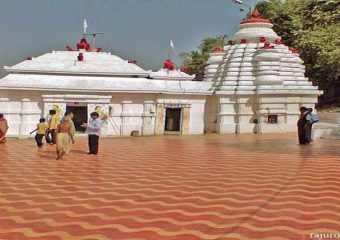
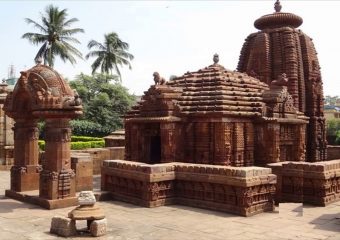
Baitala deuala  or Vaitala deuala (Odia: ବଇତାଳ ଦେଉଳ) is an 8th-century Hindu temple in Bhubaneswar, the capital city of Odisha, India, dedicated to Goddess Chamunda in the typical Khakara style of Kalinga architecture. Tini-mundia deula is another name for it because of the three spires on top, which are very distinctive and unusual features. The three spires are thought to represent the goddess Chamunda’s three powers: Mahasaraswati, Mahalakshmi, and Mahakali.

Architecture:

The striking feature of Baitaḷa Deuḷa  Temple is the shape of its sanctuary tower. Its semi-circular roof is a prime example of the Khakhara order of temples, which is similar to the Dravidian Gopuram found in South Indian temples. Its gabled towers, punctuated by a row of Shikharas, reveal unmistakable signs of southern intrusion. The deuala’s plan is oblong, and the Jaganmohan is rectangular, but there is a small subsidiary shrine embedded in each angle. Baitala deuala boasts of some figures that, despite being executed in relief, are distinguished by delicacy of features and perfect equipoise.

Panels portraying Hindu deities, notably Shiva and his consort Parvati, hunting processions, catching wild elephants, and the rare sexual pair, adorn the outside walls.

The lower chaitya window has a carved figure of the sun god, Surya, with Usha (Dawn) and Pratyusha throwing arrows on either side and Aruna in front, driving a chariot of seven horses, and the upper one has a carved figure of the sun god, Surya, known for its facial expression.

A 10-armed Nataraja, Shiva’s dancing form, is shown in the medallion in the upper Chaitya window. A stone pillar with two Buddha-like figures seated in Dharma-Chakra-Pravartana mudra stands in front of the flat-roofed Jagamohana.

The temple’s Tantric links are very prominent, as seen by spooky carvings in the sanctum. The fearsome form of the goddess, eight-armed Chamunda, locally known as Kapaini, is housed in the middle niche. Baitala Deuala is thus a Shakti shrine.

The Deity:

Chamunda or Charchika, the presiding deity, sits on a corpse flanked by a jackal and an owl and adorned with a garland of skulls. She is piercing the demon’s neck with a snake, bow, shield, sword, trident, thunderbolt, and arrow. A chaitya window with sitting images of Shiva and Parvati crowns the niche.

Chamunda is flanked by a slew of smaller allied deities carved into the lower walls, each in their niche separated by a pilaster. The skeleton form of Bhairava, Chamunda’s counterpart, is shown on the east wall, to the right of the door. The other, engraved on the north wall, emerges from the ground, his skull-cup filled with the blood of a person whose severed head is on the right. A jackal eating on the severed victim on the right and a woman clutching ahead on the left flank an offering of two more heads on a tray sitting on a tripod on the pedestal.

The stone pillar in front of the Jaganmohan, to which sacrificial gifts were fastened, adds to the temple’s tantric nature. Although the early morning sun illuminates the interior, artificial light is required to see in the darkness.
Maa Sarala Temple

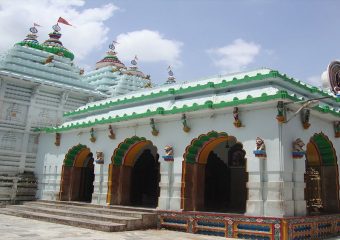
The Maa Sarala Temple is a Hindu temple in the Odisha district of Jagatsinghpur. It is one of Odisha’s eight most famous Shakta shrines.

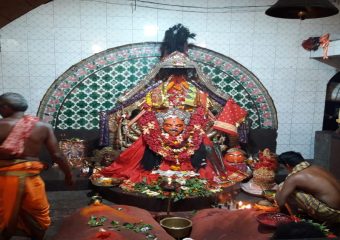
‘Maa Sarala’ (Mother Sarala) is a Hindu Goddess who serves as a patron to Vaishnav and Shakta devotees. It is unusual for a single deity to be worshipped by both of these Hindu sects. She is sometimes thought to be a Buddhist tantric figure because she is holding a book, a Veena, and a handbell, all of which are Mahayana symbols. Vak Devi, the Goddess of Knowledge and Wisdom, and Jhankad Vaasini Sharada are some of the other names for Goddess Sarala.

The goddess’ folklore dates back thousands of years, to the time of Parashurama. It is said that the goddess was carved with the tip of the god Parashurama’s arrow. Sidheshwar Parida, a small-time farmer, and part-time Odia Paika are credited with popularising Goddess worship in the 15th century CE. He was a devout devotee of the Goddess who later became Sarala Das, the author of the Odia Mahabharata. He refers to Goddess Sarala as Durga, Aparna, Parvati, Narayani, Bhavani,Barati, Mahalakshmi, Mahakali, Katyayani, Chandi, Ugratara, Kamala, Bhairavi, Bhagavati, Mangala, Aparna, Hingula, Tripura, Vasuli, Maha Yogeswari, Tarini, Ambika, Mahasaraswati, Charchika, and Parama Vaisnavi etc.

The current temple was built around 500 years ago by the Raja of Manijanga. The ruins of the old temple are no longer visible, but folklore suggests that it was located in Badasarol, where a Ganesha temple now stands.

The temple hosts many festivals, including Parbana, Sharadiya Utsav, Pana Sankranti, Dola Purnima, and Chandan Jatra. The inhabitants of the districts of Kendrapara, Jagatsinghpur, and Cuttack are so devoted to the goddess that they visit the temple at least once a year.

Accommodation and location:

By road, the temple is 20 minutes from the district seat in Jagatsinghpur. Bhubaneshwar, the nearest airport, is around 80 kilometers distant. Rahama Railway Station is the closest station. Buses from Cuttack go frequently to the shrine. A facility for overnight accommodation is maintained by the Government of Odisha’s Roads and Building (R&B) Department. A rest house is also maintained by the Water Resources Department near the temple.

Mahurikalua

Mahurikalua is a well-known tourist destination in Odisha’s Ganjam district. Thousands of tourists visit this location each year. This is one of the area’s favorite picnic spots. This shrine, located in the Kerandi hills’ woodland, is dedicated to Goddess Mahurikalua.
History:
This temple was worshipped by King Mahuri and his family, and he built it during his dynasty prior to British rule. People believed that the deity shielded the king from all harm with a special sword. The deity presented the king with a special sword that was very short but grew in size during the critical time. There is no sign of such a sword now, and it is only a legend.
Festivals:
Every month’s Sankranti, especially Mesha Sankranthi, is the temple’s most important celebration. This day is observed as the temple’s annual feast. On this memorable day, you can expect around one lakh guests.
Natural Beauty :
This temple is surrounded by lush green hills, adding to its allure. The beauty is enhanced by the silence of the hills and the singing of the birds. When you get into the temple, you can sense the tranquility in your heart. Here you can enjoy a natural, pollution-free environment. The actual temple was built on the top of the hill, but the king later built a temple at the foot of the hill so that numerous devotees could pray to the deity.
Previously, the royal family of King Mahuri looked after this temple, but currently, it is looked after by the Rauta family, a well-known business family. The management may change, but the royal family continues to play a significant role in the temple’s religious activities.
There is a modest rest house for visitors in addition to the temple. Some new development projects, such as the 999 stairs up the hill and the Sankitran mandapam, are currently underway with the assistance of Orissa Tourism.
How to Reach?
This is much closer to Berhampur, the Silk City. This city is about 15 kilometers away. It is 180 kilometers from the state capital of Odisha, Bhubaneswar. Tourists must first go to Berhampur by train, after which they can reserve a tourist car or vehicle and be at the destination in under half an hour. Our Odisha tourism has built a good Pakka road that leads to the shrine. Remember that there is no regular bus service to the temple on regular days.

Bhattarika Temple

Bhattarika Temple is one of Odisha’s most prominent Hindu pilgrimage sites, located in Sasanga village, Tehsil Baramba (previously Athgarh), Cuttack district, Odisha, India, on the bank of the Mahanadi River. It is dedicated to Maa Bhattarika, a Hindu goddess revered as a manifestation of Shakti. Parashurama, facing imminent loss at the hands of Saharsrajuna, appealed to Durga, who appeared on this site, to transfer her divine might to his aid, according to Puranic legend. The Bhattarika Temple is thought to have been built between the sixth and sixteenth centuries A.C.


It holds great religious significance for the people of Odisha because of the various mythological stories associated with it. Pana Sankranti in Chaitra (April), Akshaya Trutiya in Baisakh (May), and Dussehra are the major festivals celebrated here (October). During the festive months, thousands of pilgrims flock to this auspicious temple. There is a rickety stairway leading to the top of the hill. It’s like a mini-trek to the peak, with small temples and caves along the way. One cave in particular, with a picture of Lord Hanuman, is well worth a visit. The Odisha tourism department did an excellent job in constructing designated sheds on top of the hill. When one stands in front of the breathtaking view, one has the impression of being as tall as the surrounding mountains, with the river valley rolling beneath one’s feet. It’s difficult to pinpoint exactly what makes the place so appealing. It is certain to leave an everlasting impact on your mind, whether it is the thunderous roar of the enormous river vibrating through the valley, the sweeping views of the distant mountain range, or the wonderful tales surrounding this area.