Saptamatruka Temple

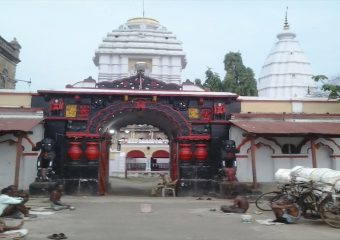
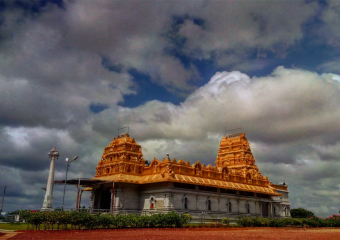
Saptamatruka Temple is a Hindu temple located in Jajpur, Odisha, India. Saptamatrikas, Hindu Tantric, and Puranic Goddesses are honored at this temple.

Goddess of the President :
According to legend, these goddesses sprang from Devi Durga’s body while she was slaughtering Nishumbha and Shumbha. The matrikas reflect their respective male God’s inner willpower. Brahmani, Vaishnavi, Shivaduti or Indrani, Narasimhi, Chamunda, Kaumari, and Varahi are the Saptamatrikas.

At Present :
The rebuilt Saptamatrikas temple in Jajpur is located on the south bank of the Baitarani River. This shrine is also close to the Budha Ganesha Temple and Dashaswamedha Ghat. During the Krishna paksha Chaturdasi with Shatabhisha nakshatra in Chaitra month, people take a sacred dip. The goddesses are considered to be attendants of goddess Viraja and to safeguard the people of Jajpur regularly.

History :
The temple was in jeopardy and was eventually restored by ASI, India. The deities were installed for protection during Yajati Keshari’s Ashwamedha sacrifice. The idols’ design may be traced back to the 11th century AD. During Kala Chand’s control in Murshidabad, his forces came to destroy Hindu temples in and around Jajpur, and the Brahmins hid the Saptamatrika images in a tunnel near the Baitarani River. The images were later discovered and worshipped by Jajpur’s Utkala Brahmins.
Gupteswar Cave

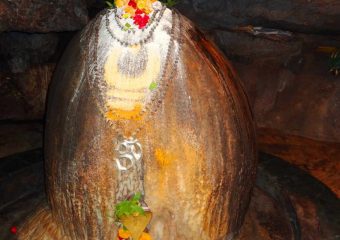
Gupteswar Cave is a Shiva-dedicated cave shrine. It is a pilgrimage destination located 55 kilometers (34 miles) from Jeypore in the Koraput District of Odisha, India. It is a limestone cave with the massive Shiva Linga as its main feature, which is supposed to be growing in size. The cave is thought to have been found by Rama and rediscovered during Maharajah Veer Vikram Dev’s rule. Devotees travel to the shrine barefooted with adorned bamboo palanquins called “Kanwadiya” and bathe in the maha kund before worshipping Lord Gupteshwar during the holy month of Shravan. The Shiva linga shrine is reached via 200 steps. It has a 3 meter (9.8 ft) wide and 2 meters (6.6 ft) high entrance.

Legend :

A 2 meter (6.6 ft) high lingam rises in the cave, surrounded by a lush grove of sal trees and bordered by the Kolab River. Because the lingam stayed undetected for such a long time, the shrine is known as “Gupteswar,” which means “God in hiding.” Climbing the 200 steps surrounded by rows of champak trees is the only way to get there. A big stalactite can be found inside the second cave. People revere it as God Kamadhenu’s (the celestial cow’s) udder, waiting beneath it with outstretched fingers to gather water drops that fall only at lengthy intervals.
This sacred site is affiliated with the Hindu divinity Lord Shri Rama and is locally known as “Gupta Kedar.” Ramagiri is the name of a local hill. According to legend, Lord Rama discovered the lingam while wandering through the Dandakaranya jungle with his wife Sita and brother Lakshman, and dubbed the deity in the cave “Gupteshwar.” In his famous Meghadutam, the poet Kalidas also portrayed the beautiful grandeur of Ramgiri forest, where the cave temple is mentioned.
However, as time passed, the temple fell into disuse, but in the 17th century, a hunter discovered the Shiva lingam and told Maharajah Veer Vikram Dev, who was the king of the region at the time and had recently relocated his capital from Nandapur to the newly formed Jeypore. The grandiosity of the gigantic lingam and the gorgeous natural environs enthralled King Veer Vikram, who paid a visit to the cave. He installed priests in the cave temple and established a ritual of making a pilgrimage to Lord Gupteswar’s cave during the holy month of Shraavana, which is still carried out by the people of the erstwhile realm. The Koraput region’s tribes and residents have venerated the lingam since then. Over 200,000 worshippers from Odisha, Andhra Pradesh, and Chhattisgarh visit Gupteswar Temple during Shivaratri (a Hindu festival). Incurable sickness patients come to worship the god and stay for months in the hope of being cured.

Kolab Dam

Kolab Dam is a gravity dam in the Koraput district of Odisha, India, near Jeypore. The dam impounds the Kolab river, a tributary of the Godavari.

Hydro Electric Project :
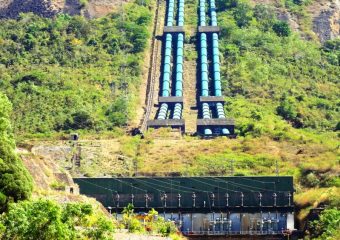
The beautiful Kolab Reservoir, which generates hydroelectric power and is located at an altitude of around 914.4 m (3,000 ft) above sea level on the river Kolab, a branch of the Godavari river, is 646 m (2,119 ft) long and 55 m (180 ft) tall.

The water potential of the river Kolab, a tributary of the Godavari, is being used in this project. The project can generate 95 MW of firm power and 832.2 million units of electricity, which is distributed to the general grid via the Jeypore sub-station.

History :
During British rule, while Koraput district was part of the Madras presidency, a concept for a “Kolab dam project” arose. Odisha’s government investigated independence in 1961. After multiple suggestions from the Odisha government, the project was finally accepted by the planning commission in 1976, and it was finished in 1993.

Tourism :
The Kolab Dam is regarded as Odisha’s most beautiful natural scenic feature. Around 200 species of flowering plants may be found in Kolab Park, a botanical garden near the dam. The Kolab Power Plant, which is located at an altitude of roughly 914.4 meters (3,000 feet) above sea level, is adding to the beauty of the area. Every year, thousands of tourists go to this location for a weekend picnic and boating.

Manikeshwari Temple

Manikeshwari Temple is located in the Odisha district of Kalahandi. The temple is situated south of Bhawanipatna. Goddess Manikeshwari is the main deity here. She is Nagavanshi Khyatriya’s, Ishta Devi. Animal sacrifice is performed at this temple during the Dussehra festival. A film is also available that depicts the animal sacrifice ritual performed in front of Goddess Manikeshwari. Karlapat, known for its charming wildlife, is close to the temple.
The modern Manikeswari temple in Bhawanipatna was built on the foundation laid by Udit Narayan Deo, and Brajamohan Deo completed it in 1947. Manikeswari has been known in Kalahandi history as Manik, the goddess of wealth, since the 10th century.
Every year, at a specific time, the Chatar yatra is held, and many individuals who have had their desires granted gather to sacrifice animals in the name of the goddess.