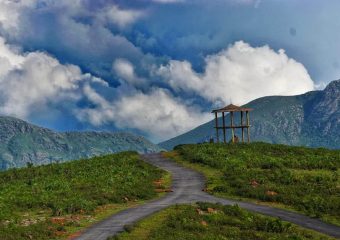
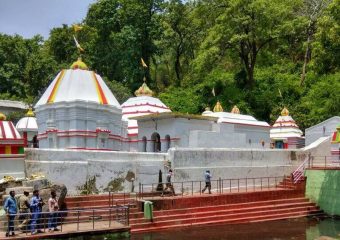
Semilipal national park, located in mayurbhanj district in the Indian state of odisha and a tiger sanctuary . it covers 2,750 km 2 (1,060 sq m). It is a part of the Mayuarganj elephant reserve comprising of three protected areas, the Simlipal tiger reserve, the Hadagarh wildlife sanctuary 191.06 km 2 (73.77 square miles) and the Kuladiha wildlife sanctuary 272.75 km 2 (105.31 sq. m). The name similpal national park is due to the abundance of red silk cotton trees growing in the region. In India, it is the 7th largest park. The park is home to the Bengal tiger, the Asian elephant, gaur, chausingha, and some lovely waterfalls come along with Joranda and Benghapani. This is a part of the UNESCO world heritage site since 2009.
HISTORY:
In the origin of the Similipal elephant reserve, born mainly as a hunting area for royalty. It was formally named tiger reserve in 1956 and in May 1973 under project tiger. The scheme, “Mugger crocodile” was launched in Ramatirtha, Jashipur in 1979.
The government of Odisha announced Similipal in 1979 in a wildlife sanctuary with an area of 2,200 sq. km (850 sq. miles). Subsequently, in 1980, the state government proposed 303 square kilometers (117 square miles) of the sanctuary as the national park. In 1986, the area of a national park was increased to 845.70 sq. km (326.53 sq. miles). The government of India in 1994 declared the Simlipal a biosphere reserve. UNESCO included this national park in its biosphere reserve list in May; 2009. The forest has 10,000 people living in 61 villages. That is why Similpal has not been declared a full park yet despite being the status of one of India’s 18 biospheres.
WILDLIFE:
This is the home of 1076 plants related to the park’s 102 families. Here are 96 species of orchids have been identified. It is located in the echography of the Eastern Highlands moist deciduous forests with tropical moist broad-leaved forests and dry deciduous hill forests and high-level year forests with tropical moist deciduous forests. The savannas and grasslands provide grazing grounds for the herbivores and carnivorous animals as hiding places. The forest has innumerable medicinal and aromatic plants which provide a source of income to the tribal people. The eucalyptuses planted are found by the British during the 1900s.
Shows a total of 42 species of mammals, 242 species of birds, and 30 species of crawling animals. Major mammals include tiger, leopard, Asiatic elephant, sambar, barking deer, gaur, wild cat, wild boar, chausingha (four-horned antelope), giant squirrel, and common langur. In these forests, 231 species of birds build a nest. The red jungle fowl, the hill mynah, the peafowl, the Alexandrine parakeet, crested serpent eagle are the common birds found in these forests. Gary hornbill, Indian pied hornbill, Malabar pied hornbill and Indian trogon are also found here.
The park has a considerable number of reptiles where snakes and turtles are found. The crocodile management program has helped crocodiles to survive and thrive on the Banks of the Khairi River.