



The Ushakothi Sanctuary, which covers a forest area of around 304.03 square kilometers and is about 22 kilometers from Sambalpur, was established in 1962. Hirakud Dam is located to the west of the Sanctuary. Floral species such as sal, sandalwood, Arjun, neem, acacia, and casuarinas are common in this dry deciduous forest type. Tigers, elephants, sambar leopards, and bison are among the animals found there. The sanctuary now houses roughly 15 tigers and 35 elephants. Racket-tail dragons and flying squirrels are the major attractions of this refuge, which is rich in avifaunal abundance. There is a two-roomed forest rest house inside the sanctuary for overnight stays. Reservations can be made through the same sanctuary’s Divisional Forest Officer in Sambalpur.
Tag: #popular places in odisha
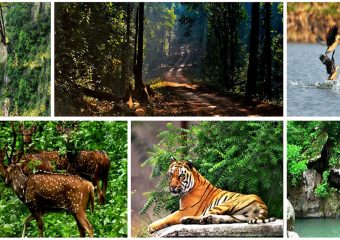
Kotgarh Wildlife Sanctuary
The Kotgarh Wildlife Sanctuary is located in the Baliguda subdivision of Odisha’s Kandhamal district. It’s classified as a moist deciduous forest in the Eastern Highlands. The sanctuary is home to 52 tribal settlements, including Kutia Kondh and Desia Kondh.
Madagoda 36.02 km2 (14 sq mi), Haripur 42.66 km2 (16 sq mi), Lassery72.96 km2 (28 sq mi), Bonduru3.67 km2 (1 sq mi), Supamaha7.55 km2 (3 sq mi), Killangi6.073 km2 (2 sq mi), Subarnagiri30.04 km2 (12 sq mi), and Guma14.04 km2 (12 sq mi) are among the designated and proposed reserve forests (5 sq mi). 340 The Kotgarh sanctuary covers the Kandhamal district’s Kotgarh jurisdiction, Tumudibandha range, and Daringbadi block.
Kotgarh has been selected to be one of the 14 elephant corridors planned for the safe mobility of elephants who frequently leave their homes in search of food and water.
Flora :
The sanctuary’s principal vegetation is dense damp deciduous forests with meadows. There are 650 plant species in the sanctuary’s floral diversity, including angiosperms, pteridophytes, gymnosperms, bryophytes, lichens, and fungi. Sal, Piasal, Sisoo, Kendu, Gamhar, Asan, Kusum, Harida, Bahada, Amala, Mango, Tamarind, Mahua, Jackfruit, Randhan, Kangada, Jamun, Salapo, Bheru, Arjun, Char, Dhaura, and Kochila are among the prevalent flora.
Many rare and endangered medicinal plants exist, including Abutilon Indicum, Cissus quadrangularis, Crateva Magna, Cycas sphaerica, Garcinia xanthochymus, Gloriosa superba, Justicia adhatoda, Litsea glutinosa, Oroxylum Indicum, Pueraria tuberose, Rauvolfiatetraphylla, Saraca asoca, Steriospermum suave.
Fauna :
Tigers, elephants, Gaur, Sambar deer, Spotted deer, Peafowl, Red jungle fowl, Blackbuck, Leopard, Sloth bear, Chital, and various bird and reptile species, including rare species like Boiga forsteni, can all be found in this sanctuary. The sanctuary’s major attraction is the Chousingha (Tetracerus quadricornis), or four-horned antelope.
Attractions :
Many nature lovers go to a wooden cottage in Belghar.
How to reach :
By Road: The NH-59 connects Baliguda to Berhampur and other Orissa cities.
By Rail: The nearest rail station is Berhampur, 180 kilometers from Muniguda, on the S.E. Railway.
By Air: The closest airport is at Bhubaneswar, 291 kilometers from Balliguda.

Pipili
Pipili is a town and a NAC in the Indian state of Odisha, located in the Puri district. It is well-known for its exquisite Applique handicrafts. It is a town known for its colorful fabrics and artists. At the intersection of the Bhubaneswar to Puri road and the Konark road, it is 36 kilometers from Puri and 18 kilometers from Bhubaneswar.
Population :
Pipili has a population of 14,263 people according to the 2001 India census. Males make up 51% of the population, while females make up 49%. Pipili has a higher literacy rate than the national average of 59.5 percent, with male literacy at 77 percent and female literacy at 63 percent. 12 percent of Pipili’s population is under the age of six.
According to the 2011 Census, Pipili has a population of 17,623, with 9,036 men and 8,587 females.
Portuguese era :
The first Portuguese settlers landed in Pipli around 1514. The monarchs of the Kingdom of Orissa had cordial connections with him. Settlers built a factory, and the Portuguese became the main commercial firm, shipping rice, cotton, and butter from Orissa to Borneo and bringing Chinese goods and spices from Indonesia. For the next few decades, settlers and locals interacted, resulting in a Portuguese Creole that was spoken until the turn of the twentieth century (Indo-Portuguese creole). This description refers to Pipili(Pipley)port, which was once located near Balasore but has since sunk into the mud and been forgotten. The Pipili between Bhubaneswar and Puri has nothing to do with it.


Economy :
In Puri and the surrounding area, the appliqué work of Pipili, also known as “chandua” in colloquial language, is arguably the most well-known handcraft. This applique skill is practiced by every household in Darjisahi, a well-known applique village. The majority of the people here rely on this for a living.


Education :
Pipili’s Kidutopia Playschool/Preschool is arguably best renowned for its world-class environment, which is overseen by competent engineers who work in the Pipili bazaar and surrounding area. There is a government college and a private science institution, as well as a variety of different coaching institutes. It’s a small yet lovely township with well-educated and informed residents.
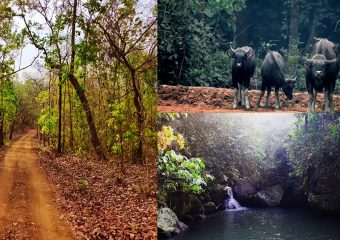
Kuldiha Wildlife Sanctuary
In the Indian state of Odisha, the Kuldiha Wildlife Sanctuary is located in the Balasore district. In the Chota Nagpur Plateau region, the sanctuary covers 272.75 km2 (105 sq mi). The Sukhupada and Nato hill range connect it to Simlipal National Park. The Eastern Highlands’ moist deciduous woods ecoregion is named after it. For a night’s stay, you must make a reservation in advance. It is usually closed between July and September when the monsoon season is at its peak. In 2012, a major fire devoured both the Simlipal and Kuldiha woods, causing substantial plant and fauna destruction. The government designated the sanctuary as an ecologically sensitive zone on August 2, 2013.
Tourism :
Kuldiha is a popular tourist destination in northern Odisha, attracting both visitors and academics.
Odisha’s government recognized that private operators were causing environmental harm to several parks, sanctuaries, and reserves, posing a long-term threat to biodiversity. It devised an ecotourism strategy to preserve the natural world’s pristine status while making it economically feasible through a public-private partnership model. The Kuldiha Sanctuary is run on a community-based ecotourism strategy that helps the villagers and tribesmen that live in the sanctuary’s core area.
Access:
Bhubaneswar and Kolkata are nearly equidistant from the sanctuary. It is easy to get there from Bhubaneswar, the state capital of Odisha. Biju Patnaik International Airport is the closest airport. Balasore railway station is the closest station. Take NH16 (formerly NH5) to Nilagiri and exit at State Highway 19, where a picturesque small road leads to the sanctuary entrance.
Fauna and Flora
The Sal tree dominates this mixed deciduous forest. Tigers, Leopards, Elephants, Gaurs, Sambars, Giant Squirrels, Hill Mynas, Peafowl, Hornbills, and other migratory birds and reptiles all live in the jungle. This study includes a complete scientific report on the animal species found in the park. The refuge serves as a study and conservation center for the environment and animals. There are several scientific surveys and papers available that focus on the sanctuary’s flora and animals.