Satkosia

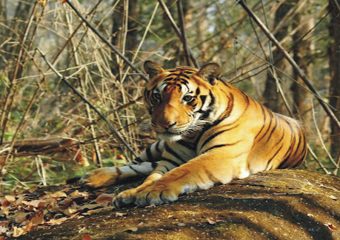
Satkosia is without a doubt one of Odisha’s most stunning ecosystems. It is a tiger reserve and a breeding center for freshwater crocodiles, gharial, and muggers, as well as having a spectacular gorge across the River Mahanadi. The Baisipalli Sanctuary is a short distance away. The Satkosia Tiger Reserve is made up of two wildlife sanctuaries: Satkosia Gorge and Baisipalli, which are spread across four districts: Angul, Nayagarh, Cuttack, and Boudh. The tiger reserve covers an area of 963.87 square kilometers, but the core area is only 523.61 square kilometers..

Tikarapada, Chhotakei, and Purunakote are the three entrance sites of Satkosia. Freshwater turtles such as Chitra indica and Aspidiretes gangeticus, as well as enormous gharials and muggers lazing in the sun on the riverbank, can be seen while boating in the authorized region of Mahanadi towards the gorge. The river is flanked on both sides by beautiful mountains. Even though there are forest rest homes in Chhotakei and Purunakote, the 10 eco-tents in Tikarpada, which are maintained by a group of tribal youths from Tikarpada village employed by the forest department for the purpose, are the most beautiful lodging units in Satkosia.

The youths are extremely friendly and helpful; they not only maintain the tents and lead guided nature treks through the forest, but they also cook for the visitors. They catch freshwater fish from the river on request and cook them in an open kitchen for visitors. Tourists can visit Tikarpada’s Gharial Research and Conservation Unit, which raises young sub-adult gharials in captivity. The Satkosia Wildlife Division has established a similar facility in Tarava village, where local communities host nature enthusiasts. Reservations for the forest rest houses and eco-tents can be made at www.satkosia.org. The Satkosia eco-system is approximately 200 kilometers from Bhubaneswar, which has the closest airport link. If traveling by road from Bhubaneswar, take the NH-6 to Cuttack and then the NH-42 to Dhenkanal and Angul. To enter Satkosia, obtain a permit at the Divisional Forest Office in Angul and then proceed to Pampasar, the main entry gate. To visit Satkosia, you must first obtain a permit from the Divisional Forest Office in Angul, then travel to Pampasar, the main entry gate.
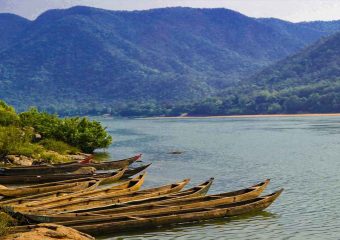
Tikarpada wildlife sanctuary

While Odisha has many wildlife sanctuaries, what makes Tikarpada unique is its efforts to reintroduce endangered gharials (crocodiles). The gharials that live here were reintroduced into the Mahanadi River ecosystem to increase their population. The wildlife sanctuary, which covers an area of 795.52 km2 and is located in the Angul District of Odisha, is also a popular tourist attraction because it is home to various species of turtles, snakes, and avifauna. The Satkosia Gorge, formed by the Mahanadi River as it flows through the hills surrounding Tikarpada, attracts more visitors for a sightseeing tour here. On their tour to this wildlife sanctuary, adventurers can also enjoy activities such as trekking, river rafting, and angling.

Flora and Fauna

Tikarpada Wildlife Sanctuary is well-known for its gharial breeding program, but it is also known for its diverse flora and fauna. Some of the fauna species that can be seen in this Odisha tourist destination include leopards, spotted deer, tigers, rhesus macaques, Indian Pittas, red jungle fowls, and pangolins. Tikarpada is also visited by tourists who want to see the avifauna species circling in the sky, which includes both migratory and indigenous birds.

Best Time To Visit

If you want to visit Tikarpada Wildlife Sanctuary, the months of October to February are considered to be the best. As long as the weather is pleasant, visitors can enjoy all of the activities available at the wildlife sanctuary.

How to reach 

The nearest airport to this sanctuary is Bhuwaneshwar’s Biju Patnaik Airport, which is approximately 114 kilometers away. You can also travel by road, as there is good connectivity from Angul, Dhenkanal, and Odisha’s other major cities. Angul, the nearest station, is 42 kilometers away. The Bhubaneswar railway station is another important railway station. Numerous buses run from the state’s major cities to the wildlife sanctuary.

The Maninaga Temple

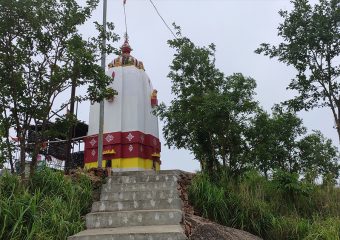
The Maninaga Temple is a well-known hill station in Ranapur, Nayagarh (Odisha). In Odia, the Maninaga Temple in Ranapur is known by two names: Upper Maninaga and Tala Maninaga. Goddesses are worshipped by brahmins and pilgrims in both locations. Upper Maninaga temple is the most beautiful hill station or hill temple in Odisha. Many tourists come here to see the Hill temple. It is one of the best hill stations and hill temples in the state of Odisha.

Attractions Of Maninaga Temple

There are no words to describe the beauty of Ranapur’s Maninaga temple, but it is necessary to do so for tourists, visitors, and pilgrims.

Attractions Of Upper Maninaga

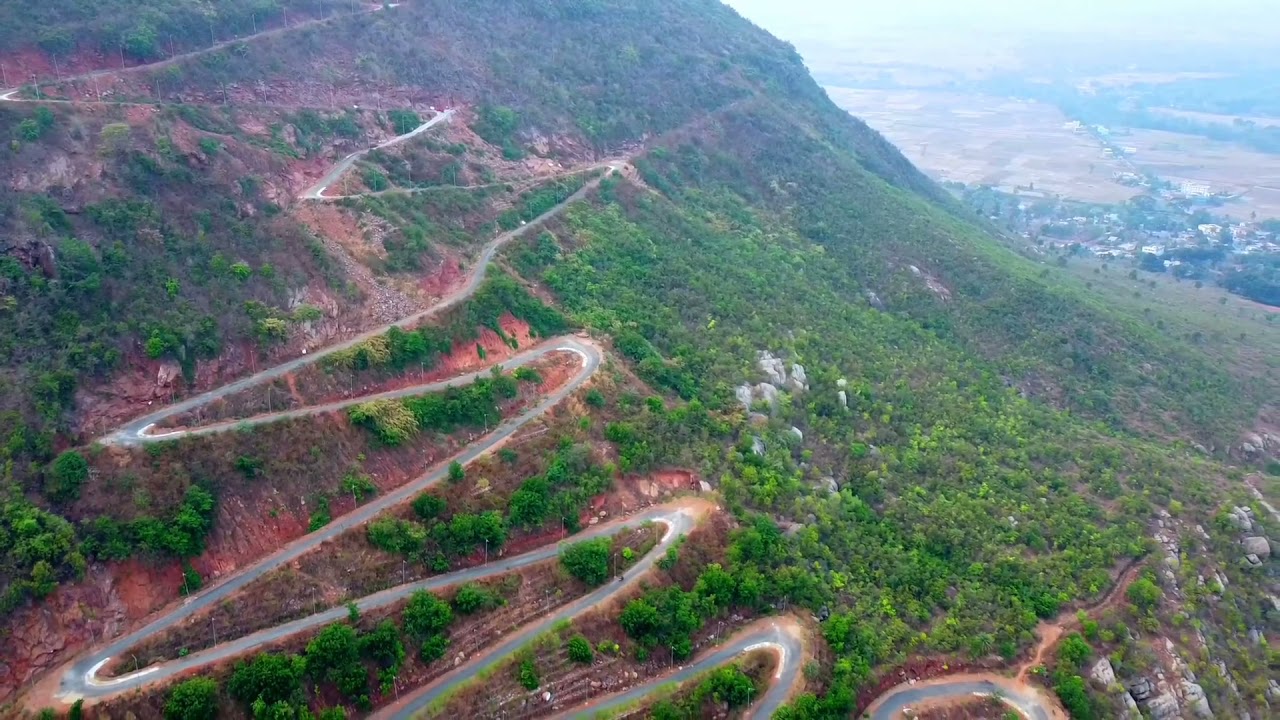
  • It is about 5 kilometers from Tala Maninaga. Upper Maninaga temple is accessible by road. On this road, both two-wheelers and four-wheelers can easily reach the top of the hill temple.
  • From the top of the Maninaga temple, the roads resemble a snaking curve.
  • The weather appears cloudy at the top of Maninaga Hill, which is surrounded by beautiful nature.
  • On both sides of the hill road, there are many Saccharum Spontaneum flowers (Kasatandi flowers in Odia).
  • Maninaga Monkeys can also be found at the top of the hill.

Attractions Of Tala Maninaga

  • Because this is a hill station and temple area, many people visit both the Upper and Tala Maninanaga Temples.
  • There is a large Wedding ceremony (Kalyan Mandap) Place in Tala Maninaga where people can get married.
  • This is a larger area where people can gather for a large party or feast.

Bhitarkanika National Park

Bhitarkanika National Park is a 145-square-kilometer (56-square-mile) national park in eastern India in Odisha’s northeast Kendrapara district. It was designated on September 16, 1998, and was designated as a Ramsar site on August 19, 2002.

After Chilika Lake, the area has been classified as the state’s second Ramsar site. Bhitarkanika Wildlife Sanctuary, which covers an area of 672 km2, surrounds it (259 sq mi). The Gahirmatha and sea sanctuaries are in the east, to separate mangroves from the swamp area and bay of Bengal. The rivers Brahmani, Baitarani, Dhamra, and Pathsala inundate the national park and wildlife sanctuary. It is India’s second-largest mangrove environment and home to a variety of mangrove species.

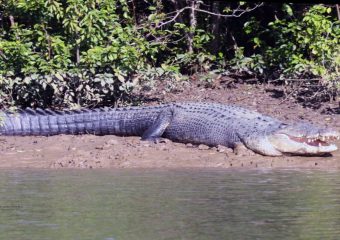
Saltwater crocodiles (Crocodylus porosus), Indian pythons, king cobras, black ibis, darters, and a variety of other flora and fauna can be found in the national park.

Fauna

The saltwater crocodile, Indian python, black ibis, wild boar, rhesus monkey, chital, darter, cobra, and monitor lizard all live in the park. On Gahirmatha and other nearby beaches, olive ridley turtles lay their eggs. Bhitarkanika is home to one of India’s greatest populations of endangered saltwater crocodiles, with 10% of adults over 6 meters in length. The rivers and creeks are home to over 1671 saltwater crocodiles. During the yearly breeding and nesting season in 2014, approximately 3,000 saltwater crocodiles were born.

According to a 2014 mammalian survey, which was the first of its type in the park’s forest and wetland sections, 1,872 spotted deers and 1,213 wild boars have made the forest areas their home. According to the study data, monkeys account for 1,522, jackals for 305, common langur for 39, otter for 38, sambar deer for 17, jungle cat for 11, fox for 10, mongoose for 7, wolf for 7, and fishing cats for 12.

There are 320 species of birds in the avifauna, including eight kingfisher species. The park is home to a variety of birds, including Asian open bill, cormorants, darters, black ibis, and egrets. During the monsoon season, around 120,000 winter visitors from overseas and 80,000 resident birds from various areas of India arrive at the nest.

Flora

Mangroves are salt-tolerant, complex, and dynamic eco-systems that can be found in tropical and subtropical intertidal environments. In the estuarine region of Brahmani – Baitarani in the north-eastern portion of Odisha’s Kendrapara district, Bhitarkanika is one such site with a rich, lush green, dynamic ecosystem. A network of waterways runs across the area, with the Bay of Bengal to the east. The second-largest sustainable mangrove ecosystem in India is found in the alley between meandering streams and rivers. Its 672 square kilometers of mangrove forest and wetlands are home to over 215 species of birds, including winter migrants from Central Asia and Europe. This habitat, one of Asia’s most stunning wildlife sanctuaries, is home to giant saltwater crocodiles and a variety of other wildlife. The government of Odisha designated 145 km2 as Bhitarkanika National Park in September 1998, via Notification No.19686/F.Mangrove forests, rivers, creeks, estuaries, backwater, accreted land, and mudflats are all part of the ecological, geomorphological, and biological context. Bhitarkanika Sanctuary is centered around Bhitarkanika National Park.

Attraction

It’s a great place to see the massive Salt Water Crocodile, which can grow to be 23 feet long, as well as other reptiles like the Water Monitor Lizard and the King Cobra. The park is teeming with spotted deer and wild boars, which can be seen in all of the major areas. Eight different types of Kingfishers can be found here, and they can be seen along the park’s many creeks and rivers.

It is highly recommended to take the boat from Khola to Dangmal or vice versa. Khola is one of the park’s entrances. This is along an artificial creek that passes through the dense mangrove forest, giving visitors a glimpse of the estuarine ecosystem and its diverse fauna. Traveling through this creek is best done early in the morning or before sunset.

Bhitarkanika has a rich historical and cultural heritage. It was once the hunting grounds of Kanika’s former King. A variety of locales, including the Bhitarkanika path and Dangmal, include hunting towers and artificial drinking holes. It is also the location of medieval Hindu temples, which can be found throughout the sanctuary. However, the main draw continues to be the abundance of wildlife.