



The Ushakothi Sanctuary, which covers a forest area of around 304.03 square kilometers and is about 22 kilometers from Sambalpur, was established in 1962. Hirakud Dam is located to the west of the Sanctuary. Floral species such as sal, sandalwood, Arjun, neem, acacia, and casuarinas are common in this dry deciduous forest type. Tigers, elephants, sambar leopards, and bison are among the animals found there. The sanctuary now houses roughly 15 tigers and 35 elephants. Racket-tail dragons and flying squirrels are the major attractions of this refuge, which is rich in avifaunal abundance. There is a two-roomed forest rest house inside the sanctuary for overnight stays. Reservations can be made through the same sanctuary’s Divisional Forest Officer in Sambalpur.
Tag: #tourist place in odisha
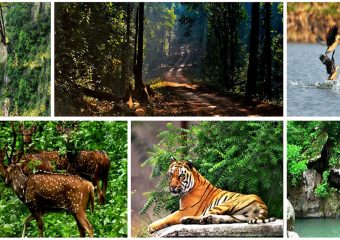
Kotgarh Wildlife Sanctuary
The Kotgarh Wildlife Sanctuary is located in the Baliguda subdivision of Odisha’s Kandhamal district. It’s classified as a moist deciduous forest in the Eastern Highlands. The sanctuary is home to 52 tribal settlements, including Kutia Kondh and Desia Kondh.
Madagoda 36.02 km2 (14 sq mi), Haripur 42.66 km2 (16 sq mi), Lassery72.96 km2 (28 sq mi), Bonduru3.67 km2 (1 sq mi), Supamaha7.55 km2 (3 sq mi), Killangi6.073 km2 (2 sq mi), Subarnagiri30.04 km2 (12 sq mi), and Guma14.04 km2 (12 sq mi) are among the designated and proposed reserve forests (5 sq mi). 340 The Kotgarh sanctuary covers the Kandhamal district’s Kotgarh jurisdiction, Tumudibandha range, and Daringbadi block.
Kotgarh has been selected to be one of the 14 elephant corridors planned for the safe mobility of elephants who frequently leave their homes in search of food and water.
Flora :
The sanctuary’s principal vegetation is dense damp deciduous forests with meadows. There are 650 plant species in the sanctuary’s floral diversity, including angiosperms, pteridophytes, gymnosperms, bryophytes, lichens, and fungi. Sal, Piasal, Sisoo, Kendu, Gamhar, Asan, Kusum, Harida, Bahada, Amala, Mango, Tamarind, Mahua, Jackfruit, Randhan, Kangada, Jamun, Salapo, Bheru, Arjun, Char, Dhaura, and Kochila are among the prevalent flora.
Many rare and endangered medicinal plants exist, including Abutilon Indicum, Cissus quadrangularis, Crateva Magna, Cycas sphaerica, Garcinia xanthochymus, Gloriosa superba, Justicia adhatoda, Litsea glutinosa, Oroxylum Indicum, Pueraria tuberose, Rauvolfiatetraphylla, Saraca asoca, Steriospermum suave.
Fauna :
Tigers, elephants, Gaur, Sambar deer, Spotted deer, Peafowl, Red jungle fowl, Blackbuck, Leopard, Sloth bear, Chital, and various bird and reptile species, including rare species like Boiga forsteni, can all be found in this sanctuary. The sanctuary’s major attraction is the Chousingha (Tetracerus quadricornis), or four-horned antelope.
Attractions :
Many nature lovers go to a wooden cottage in Belghar.
How to reach :
By Road: The NH-59 connects Baliguda to Berhampur and other Orissa cities.
By Rail: The nearest rail station is Berhampur, 180 kilometers from Muniguda, on the S.E. Railway.
By Air: The closest airport is at Bhubaneswar, 291 kilometers from Balliguda.

Kuanria Dam
Kuanria, around 50 kilometers from Nayagarh, consists of a large reservoir surrounded by blue hillocks and a 1.5-kilometer-long dam across the River Kuanria. A vast deer park extending over 6 acres near the river basin is one of the major attractions. There are roughly 160 spotted deer, barking deer, and sambar in the park. During the winter, a great number of migrating birds converge to this reservoir. The serene beauty of the hills, river, woodlands, and deer park make the area a popular tourist destination. Tourists can get medical help at the closest hospitals, CHC Madyakhanda and CHC Dasapalla. The nearest bank to the location is SBI Dasapalla.

Goddess Ugra Tara
The Goddess Ugratara is the tutelary deity of the former Kalinga kingdom’s Eastern Ganga dynasty kings. Her old temple is located in Mulajharigarh hamlet, Bhusandapur, Odisha, India, 65 kilometers from the state capital Bhubaneswar. Mother Tara’s icon is three-eyed and Chaturbhuja, with powerful weapons in her hands such as a sword, dagger, blue lotus, and a drinking cup. She is standing over a body on a funeral pyre, which is engulfed in flames. There are serpent anklets and a serpent on the crown, which undoubtedly originate from the 11th-century Tantrik treatise Sadhanamala Tantra. Later Gajapati dynasty monarchs regarded goddess Kali or Shyamakaali with less reverence, and her worship got less attention. However, many Vasishtha Gotra devotees worship her as Ishta Devi. In Hindu Tantrik theology, she is one of ten Mahavidya. She is known as Ugratara because of her fearsome appearance, yet as Ekajata/Neela-Saraswati, she is benevolent to her devotees. Bhushandapur, in the Khordha district, is a nearby railway station that is served by local passenger trains between Bhubaneswar and Balugaon. Chaitra parba, Raja Parba, and Sharadiya Durga Puja are the most important festivals in this region. She is worshipped in a tantric manner, with all Tantrik fivefold paraphernalia being offered to her.