
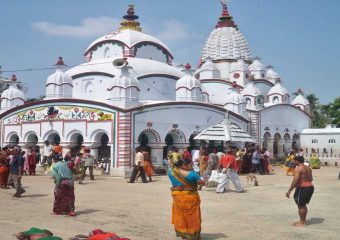
Chandaneswar Temple

Chandaneswar Temple is a prominent Shiva temple in Odisha, India, located in Chandaneswar, Baleswar district. On the first day of the Odia calendar, Pana Sankranti (Odia Hindu solar New Year), a large annual fair is held on the site. During this time, the temple attracts a large number of Indian pilgrims.
An Odisha famous “Chadak Mela/Chaitra Mela/Udaa” is held every year in the month of ‘Chaitra’ (from 14 March to 14 April). It will last for 13 days (13 Arghya to 1 Arghya discounting). Paita is accepted by Bhaktas (devotees) (pabitrata). The Bhaktas come from all over the country with their ‘manaskamana.’ The Bhaktas rise in number from the 5th Arghya to the 3rd Arghya. Approximately 3 to 4 lakh Bhaktas exclusively perform their Arghyas (prayer) at night.
Chandaneswar is well-known for its Lord Siva temple. The exquisite white marble house of worship, built in the traditional Kalinga Architecture style of Old Odisha temples, resounds with Hindu mythological stories and sculptural depictions. Swayambhu is claimed to be the Shiva Linga here (or self-originated). This sacred temple’s main feature is a black figure of Nandi. A huge number of worshippers can always be found in the vicinity of the shrine.

Location:
Chandaneshwar is located in the Odisha district of Balasore. Transport is available on a regular basis from Jaleswar in Odisha and Digha in West Bengal.

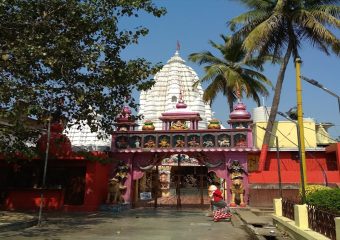
Taptapani

Taptapani is well-known for its sulfur-rich spring water. The next town is Mohana, which is located in the Gajapati district and is about 16 kilometers distant. That is also implied by the name “Taptapani.” The words “tapta” and “pani” signify “hot” and “water,” respectively.
The medicinal benefits of the hot water from Taptapani’s natural spring can be enjoyed by bathing in the pond made next to the spring. The hot spring is located at the crest of a hill on the eastern side of the Eastern Ghat, surrounded by a beautiful green forest with a diverse range of flora and wildlife. Taptapani’s indigenous cultures and gorgeous landscape are also popular draws. A deer park is also managed by the forest service.

Transport

Taptapani has easy access to major cities in Odisha, including Bhubaneswar, Berhampur, Cuttack, Jeypore, Rayagada, and Malkangiri. Berhampur Railway Station, located on the Howrah-Chennai mainline, is the nearest railway station.

Accommodation

Tourists can only stay at the expansive Panthanivas in Taptapani. The two AC suites share a balcony and include a large bedroom, dressing area, and bathroom with a little swimming pool fed by the hot springs’ warm water. The villas look out over a lush valley of varying colors of green. Anyone can sit here for hours at a time. The Dining Hall is advantageously located between two mountain fold crests. The kanduni devi temple is situated on the edge of an underground hot spring. From there, two smaller tanks, one for men and one for women, provide hot water bathing facilities. A deer park is also managed by the local forest authority.

Maa Pataneshwari Temple

Maa Pataneshwari Temple is a Hindu temple located in Kamlibazar, Sambalpur, Orissa. The temple is within the city limits of Sambalpur. The temple is dedicated to Maa Patneshwari, an incarnation of Goddess Kali. Goddess Patneshwari is the presiding deity of the Patna Kingdom. She is also known as the sister of Samaleswari.
Maa Patneshwari Temple was built in the late 16th century by Balram Dev ( the first Chauhan ruler of Sambalpur), in the heart of the city, formerly known as Patnagarh. The sanctum within which the deity Maa Pataneshwari is established is circular in design; the presiding deity, who is an incarnation of Goddess Kali, is very influential and plays a pivotal role among the people of Orissa.
The temple has vibrant architectural details throughout, from the entry gates to the shrine where the Goddess resides. When entering the temple, one can see the craftsmen’s meticulous work and small idols of different incarnations of the Goddess all over the entrance. More designs of mermaid-like creatures can be found on the front gate, which is symmetrical on both sides.