


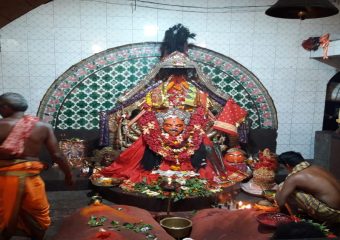
Mahurikalua is a well-known tourist destination in Odisha’s Ganjam district. Thousands of tourists visit this location each year. This is one of the area’s favorite picnic spots. This shrine, located in the Kerandi hills’ woodland, is dedicated to Goddess Mahurikalua.
History:
This temple was worshipped by King Mahuri and his family, and he built it during his dynasty prior to British rule. People believed that the deity shielded the king from all harm with a special sword. The deity presented the king with a special sword that was very short but grew in size during the critical time. There is no sign of such a sword now, and it is only a legend.
Festivals:
Every month’s Sankranti, especially Mesha Sankranthi, is the temple’s most important celebration. This day is observed as the temple’s annual feast. On this memorable day, you can expect around one lakh guests.
Natural Beauty :
This temple is surrounded by lush green hills, adding to its allure. The beauty is enhanced by the silence of the hills and the singing of the birds. When you get into the temple, you can sense the tranquility in your heart. Here you can enjoy a natural, pollution-free environment. The actual temple was built on the top of the hill, but the king later built a temple at the foot of the hill so that numerous devotees could pray to the deity.
Previously, the royal family of King Mahuri looked after this temple, but currently, it is looked after by the Rauta family, a well-known business family. The management may change, but the royal family continues to play a significant role in the temple’s religious activities.
There is a modest rest house for visitors in addition to the temple. Some new development projects, such as the 999 stairs up the hill and the Sankitran mandapam, are currently underway with the assistance of Orissa Tourism.
How to Reach?
This is much closer to Berhampur, the Silk City. This city is about 15 kilometers away. It is 180 kilometers from the state capital of Odisha, Bhubaneswar. Tourists must first go to Berhampur by train, after which they can reserve a tourist car or vehicle and be at the destination in under half an hour. Our Odisha tourism has built a good Pakka road that leads to the shrine. Remember that there is no regular bus service to the temple on regular days.
Tag: #tourist place in odisha
Joranda Gadi
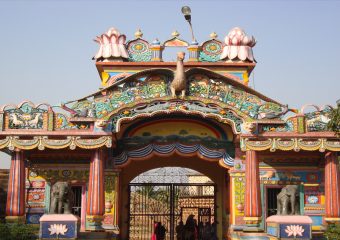
Joranda Gadi is a temple constructed at the intersection of three villages: Joranda, Natima, and Patna. The supreme lord is honored in this temple. Sunya Brahma, or the shapeless lord, is the name given to him by Mahima dharma devotees. This sect forbids the worship of idols. The supreme lord is honored in this temple. Many individuals from other religions believe that this sect’s followers worship Surya, the sun deity, although this is untrue. They simply pray to the Supreme Lord while facing Surya, as this is the direction of concentration. Apart from east and west, one can choose one’s fixed direction, however once set, it cannot be modified. Joranda mela is primarily observed by Mahima Dharma followers.

The temple was constructed in the early twentieth century, but the shrine dates back to the early fourteenth century. The Mahima Dharma was spread through Mahima Goswami’s Samadhi Peetha. Although the sect’s principles appear to be similar to those of Panchashakha, Buddhism, Tantra, and Jainism, Mahima Dharma is a separate religion in the history of Indian religions. They understand how important the Bhagavata Purana is to them. All the gods are revered by them. The sect is part of an austere group. Because ascetics of this sect are not allowed to stay in one hamlet for more than two nights at a time, staying at the meeting place allows one to move to another corner of the temple. The temple is devoted to Sunya Bramha, the formless Lord, who is the greatest lord. Inside, there is no image worship. This sect’s ascetics are now residing here. Every year, the Maagha mela draws a large number of ascetics. It is only 24 kilometers north of Dhenkanal town. It allows all guests to focus on their spiritual selves. Greetings, Mahima Alekh.
This celebration takes place every year on the full moon day of Magha (Magha Purnima Day), which falls in January-February.
Bhattarika Temple
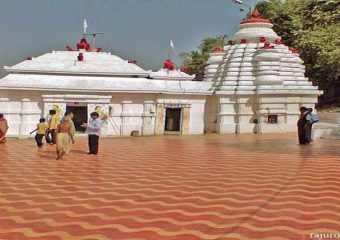
Bhattarika Temple is one of Odisha’s most prominent Hindu pilgrimage sites, located in Sasanga village, Tehsil Baramba (previously Athgarh), Cuttack district, Odisha, India, on the bank of the Mahanadi River. It is dedicated to Maa Bhattarika, a Hindu goddess revered as a manifestation of Shakti. Parashurama, facing imminent loss at the hands of Saharsrajuna, appealed to Durga, who appeared on this site, to transfer her divine might to his aid, according to Puranic legend. The Bhattarika Temple is thought to have been built between the sixth and sixteenth centuries A.C.


It holds great religious significance for the people of Odisha because of the various mythological stories associated with it. Pana Sankranti in Chaitra (April), Akshaya Trutiya in Baisakh (May), and Dussehra are the major festivals celebrated here (October). During the festive months, thousands of pilgrims flock to this auspicious temple. There is a rickety stairway leading to the top of the hill. It’s like a mini-trek to the peak, with small temples and caves along the way. One cave in particular, with a picture of Lord Hanuman, is well worth a visit. The Odisha tourism department did an excellent job in constructing designated sheds on top of the hill. When one stands in front of the breathtaking view, one has the impression of being as tall as the surrounding mountains, with the river valley rolling beneath one’s feet. It’s difficult to pinpoint exactly what makes the place so appealing. It is certain to leave an everlasting impact on your mind, whether it is the thunderous roar of the enormous river vibrating through the valley, the sweeping views of the distant mountain range, or the wonderful tales surrounding this area.
Panchalingeswar Temple
Panchalingeswar Temple is located in Odisha’s Balasore district. It is named after the five Shivalinga ensconced within. The temple is located near the Nilagiri hill on a hillock.
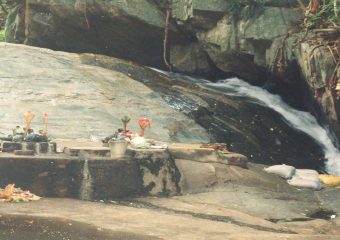
During the exile, Sita, Lord Rama’s wife, is supposed to have enshrined the Shivalingas. According to another legend, King Banasura worshipped the Swayambhu Lingas here because of their beauty. The Shivalingas are washed on a regular basis by a perennial stream that flows over them and is the area’s principal attraction. To get to the temple, one must lie flat on a rock parallel to the stream and touch and worship the lingas inside.
Location:
Balasore is 27.7 kilometers south of Panchalingeswar. The coordinates are 21.41 North and 86.71 East.
How to reach?
Balasore district includes Panchalingeswar. Panchalingeswar is also close to the city of Balasore. Nilagiri is the nearest NAC to Panchalingeswar. Both Nilagiri and Balasore have regular bus routes from Bhubaneswar. Balasore is accessible by Bhubaneswar Airport (200 km) or Kolkata Airport (300 km) (250 km). Between Panchalingeswar and Balasore, regular transportation is available.