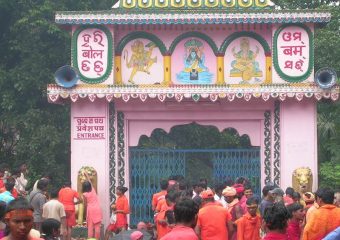
Lord Shiva is honored at the Murga Mahadeva Shrine. It is situated in the Nuamundi mining area of the Kendujhar district’s Champua subdivision, Odisha, India. Thousands of worshippers flock here throughout the months of Shraavana, Kartik, and Shivaratri. It is an ancient shrine that follows both a tribal and a Brahminical method of worship. The adjacent waterfalls add to the beauty of the area. People come here for recreation and picnics every winter.
Murga Mahadev is a combination of the words Murugan and Mahadev, which in Dravidian languages indicate Kartikeya and Shiva, respectively. Historians believe it was once a spot where indigenous gods were worshipped before being turned into a Hindu shrine. Shiva is equally revered by the people of Jharkhand and Orissa.
Tag: #tourist place in odisha
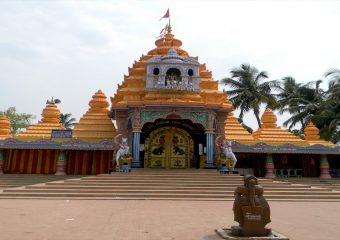
Maa Tarini Temple, Ghatagaon
The Maa Tarini Temple is situated at Ghatagaon, Kendujhar district in Odisha, India. it is a well-known Hindu Goddess temple.
Maa Tarini, as well as a few other Gods, are worshipped here.
According to locals, Tarini Maa was being transported from Puri to Kendujhar on the condition that if he turned back, she would not go any farther. The King was riding a horse to Kendujhar, and Goddess was following him. The sound of Maa Tarini’s ornaments could alert the king that Maa Tarini was approaching, but the sound of the ornaments didn’t come near the Ghatagaon in the deep forest, and the king turned back, thinking she wasn’t coming. But Maa Tarini was on her way, and her ornaments were muffled by the woodland dirt. Maa Tarini stayed there because of the situation and was worshipped as the Queen of the Forest.
Festival:
- Chaiti Yatra is the most well-known and well-attended festival in this region, held in April. It is usually observed between the last 5 days of Chaitra and the first 2 days of Baisakha, or between 9 and 15 April each year. The Odia New Year is celebrated on the first day of Baisakha.
- Patua Yatra is another well-known celebration in this region, which takes place in April.
- On the final Thursday of the Odia month, Ashadhi parba is also celebrated here: Asadha
Chhatia Bata
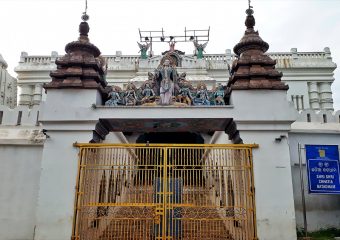
Chhatia Bata or Chhatia Jagannath Temple is a Hindu temple in the village of Chhatia, Odisha, between the towns of Cuttack and Chandikhol. It is dedicated to Jagannath and associated with Kalki, Vishnu’s avatar.
In the saga Maalika, Hadidas mentions this temple, predicting that “on a day when all living animals and humans will die and fish will play at the steps of Puri temple.”
As a result, the temple now houses lords’ idols in a unique way. There is a temple in which all three Lords are present, but in a different order than in Puri. From left to right, Jagannath, Balabhadra, and Subhadra appear to represent a new world order. There are also separate temples for each of them. Each of these is small, dark chambers that house a large idol within a grill, creating a constant sense of claustrophobia. They are only visible from the side, not from the front. The idols have large faces and are cloth-wrapped. Lord Balabhadra and Lord Jagannath ride white and black horses and hold swords in their hands, respectively. With time, the swords are reported to become longer. Lord Jagannath’s and Devi Subhadra’s feet can also be seen. Lord Balabhadra sits in front of a mirror, so you can stand behind him and look in the mirror in the light of a lamp to see his face.
Maa Sarala Temple
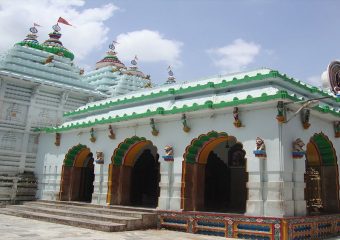
The Maa Sarala Temple is a Hindu temple in the Odisha district of Jagatsinghpur. It is one of Odisha’s eight most famous Shakta shrines.
‘Maa Sarala’ (Mother Sarala) is a Hindu Goddess who serves as a patron to Vaishnav and Shakta devotees. It is unusual for a single deity to be worshipped by both of these Hindu sects. She is sometimes thought to be a Buddhist tantric figure because she is holding a book, a Veena, and a handbell, all of which are Mahayana symbols. Vak Devi, the Goddess of Knowledge and Wisdom, and Jhankad Vaasini Sharada are some of the other names for Goddess Sarala.
The goddess’ folklore dates back thousands of years, to the time of Parashurama. It is said that the goddess was carved with the tip of the god Parashurama’s arrow. Sidheshwar Parida, a small-time farmer, and part-time Odia Paika are credited with popularising Goddess worship in the 15th century CE. He was a devout devotee of the Goddess who later became Sarala Das, the author of the Odia Mahabharata. He refers to Goddess Sarala as Durga, Aparna, Parvati, Narayani, Bhavani,Barati, Mahalakshmi, Mahakali, Katyayani, Chandi, Ugratara, Kamala, Bhairavi, Bhagavati, Mangala, Aparna, Hingula, Tripura, Vasuli, Maha Yogeswari, Tarini, Ambika, Mahasaraswati, Charchika, and Parama Vaisnavi etc.
The current temple was built around 500 years ago by the Raja of Manijanga. The ruins of the old temple are no longer visible, but folklore suggests that it was located in Badasarol, where a Ganesha temple now stands.
The temple hosts many festivals, including Parbana, Sharadiya Utsav, Pana Sankranti, Dola Purnima, and Chandan Jatra. The inhabitants of the districts of Kendrapara, Jagatsinghpur, and Cuttack are so devoted to the goddess that they visit the temple at least once a year.
Accommodation and location:
By road, the temple is 20 minutes from the district seat in Jagatsinghpur. Bhubaneshwar, the nearest airport, is around 80 kilometers distant. Rahama Railway Station is the closest station. Buses from Cuttack go frequently to the shrine. A facility for overnight accommodation is maintained by the Government of Odisha’s Roads and Building (R&B) Department. A rest house is also maintained by the Water Resources Department near the temple.