Kolab Dam

Kolab Dam is a gravity dam in the Koraput district of Odisha, India, near Jeypore. The dam impounds the Kolab river, a tributary of the Godavari.

Hydro Electric Project :
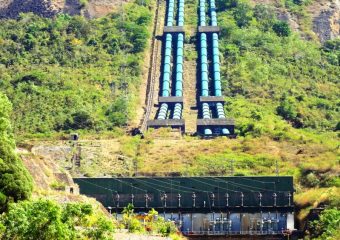
The beautiful Kolab Reservoir, which generates hydroelectric power and is located at an altitude of around 914.4 m (3,000 ft) above sea level on the river Kolab, a branch of the Godavari river, is 646 m (2,119 ft) long and 55 m (180 ft) tall.

The water potential of the river Kolab, a tributary of the Godavari, is being used in this project. The project can generate 95 MW of firm power and 832.2 million units of electricity, which is distributed to the general grid via the Jeypore sub-station.

History :
During British rule, while Koraput district was part of the Madras presidency, a concept for a “Kolab dam project” arose. Odisha’s government investigated independence in 1961. After multiple suggestions from the Odisha government, the project was finally accepted by the planning commission in 1976, and it was finished in 1993.

Tourism :
The Kolab Dam is regarded as Odisha’s most beautiful natural scenic feature. Around 200 species of flowering plants may be found in Kolab Park, a botanical garden near the dam. The Kolab Power Plant, which is located at an altitude of roughly 914.4 meters (3,000 feet) above sea level, is adding to the beauty of the area. Every year, thousands of tourists go to this location for a weekend picnic and boating.
Ramachandi Temple

Ramachandi Temple is located on the banks of the Kusabhadra River, which runs into the Bay of Bengal, in a lovely setting. It is only 5 kilometers from Konark in Odisha’s Puri district. Some believe Goddess Ramachandi, the Konark deity, is the presiding deity of this temple, while others believe it is the temple of Mayadevi, Surya’s wife (Sun God).
The scenic magnificence of the place is a graceful Chandi seated on a Lotus flower in a small temple half-hidden by sand mounds, on the river mouth of Kushabhadra and The infinite Bay of Bengal stretched on forever, surrounded by dense Casuarina plantations. The area was inaccessible to outside visitors prior to the construction of the Marine Drive road. However, it drew a large number of local devotees in the month of Ashwina to offer sacrifices or ‘Bali.’
The lovely sight has always captivated young lovers, students, and picnickers from all over. However, since the construction of the Marine dive road, the location has become much more accessible. A regular crowd of pleasure-seekers from the state, neighboring states, and distant places visits here on a regular basis.
Ramachandi coral reef is one of India’s most prominent living coral reefs, located offshore from the Ramachandi temple.

History:
Locals are familiar with a legend about the deity. During the 17th century, a rebellious Hindu Brahmin youth, Kalapahad, who converted to Islam, vowed to demolish all Hindu temples. Kalapahad approached Ramachandi temple to destroy it after destroying the Sun temple. Then, dressed as a Maluni (a maidservant), Goddess Ramachandi asked Kalapahad to stand at the door until she brought water from the river for the Goddess. Kalapahad had been waiting for some cold water for a long time. He was exhausted when it was too late and the Maluni did not return, so he entered the temple and discovered the throne empty. Then he assumed the Maluni had taken the deity with her, and he pursued the Maluni in rage. He discovered the goddess Ramachandi floating in the middle of the Kushabhadra river as he arrived at the river’s bank. He returned without being able to reach the middle of the river because the river was overflowing at the time. Then, in the dream of a Panda (priest), Goddess Ramachandi appeared and told him to build a temple on the banks of the Kushabhadra river. This location is now known as Ramachandi. Many visitors come here throughout the year to seek the blessing of Goddess Ramachandi and to enjoy the scenic beauty of the Kushabhadra River and the Bay of Bengal.
The temple has now crumbled, leaving just the shattered walls and the empty throne. Its presiding deity is unknown because of a lack of historical data.

Kishakeshwari Temple

Kishakeshwari Temple is a Hindu Goddess Chamunda alias Kali temple in Khiching, the ancient capital of the Bhanja rulers, about 205 kilometers from Balasore and 150 kilometers from Baripada in the Mayurbhanj district of north Odisha, India.
The temple, which is formed of chlorite, has a beautiful architectural design and is well carved from the outside. This temple is one of Kalinga architecture’s most stunning structures. The temple’s style is similar to that of Bhubaneswar’s Brahmeshwara and Lingaraj temples. The temple is 100 feet (30 meters) tall and has a total space of 1,764 square feet (163.9 m2). A gigantic ten-armed frightening skeletal picture of Chamunda-Kali, with stunning veins, ribs, and sunken belly, wears a garland of skulls, and sits over a dead body, can be found in the temple.

History
The town’s main temple is devoted to Goddess Kichakeswari, the Mayurbhanj reigning chiefs’ family goddess. The Goddess Kiscakeshwari was not just the Bhanj dynasty’s ishtadevata, but also the State deity. The original temple was built in the 7th or 8th century, and it has been repaired numerous times over the ages.

The main temple welcomes visitors from 5 a.m. and closes at 10 p.m. It is, however, closed from 12 p.m. to 3 p.m.

Museum
The Khiching Museum is the state of Odisha’s second oldest museum. Several images of gods and goddesses, including images of Buddha, were discovered during an excavation by the Archaeological Survey of India in 1908. These are kept in a museum within the temple compound, which was built in 1922 by Maharaja Purna Chandra Bhanjdeo.
Durga, Ganesha, Parsvanatha, Tara, Parvati, Ardhanageswar, Vaishnavi, Nandi, Kartikeya, Avalokiteswar, Dhyani Buddha, Mahishasuramardini, Uma, Maheshwara, and female followers are among the life-size idols on display at the museum. Copper and iron utensils, terracotta figurines, seals, decorations, potteries, coins, stone tools, and numerous temple remains are among the exhibits at the museum. Several sculpted portions of old temples are on show in the museum’s courtyard.
The idols of Buddha and Avalokitesvara indicate a remarkable fusion of religion and culture. It reflects the monarchs’ polished religious tolerance, which dates back to the 10th century AD.

Cuttack Chandi Temple

Cuttack Chandi Temple is a historic temple in Cuttack, Odisha, dedicated to the Goddess Chandi, the presiding deity of Cuttack. The temple is located near the Mahanadi River’s banks.
The Cuttack Chandi Mandir, one of Odisha’s oldest temples, gets around 20 lakh visitors each year. Goddess Kata Chandi is venerated here, and she is regarded as the Silver City’s ruling deity. The Goddess’s daily rites are still performed by the sixth generation of the temple’s original priest. According to folklore, the current plot of ground on which the holy temple stands was previously fallow. Late Sri Hansa Panda, who was the Purohit of the King of Kanika at the time, used to pasture cattle and sheep in the area. Panda was exhausted one day and went to rest there. The Goddess Katakeswari Chandi arrived in his dream the same night, requesting that he remove her out of the region. He told the Kanika king about the occurrence, and he ordered his workers to dig up the site.
Following that, 40 red sindoor bullock carts and an idol were discovered. Since then, the idol has been revered as Goddess Katak Chandi. The Goddess is revered as a Living Goddess by the locals. Durga Puja is a major event held in the temple during which the Goddess is adored in many incarnations. From Ashwina Krishna Ashtami to Ashwina Shukla Navami and Vijayadashami, Durga Puja is celebrated in the temple for 16 days. The temple is only open to Hindus, and the best time to visit is around Dussehra.