Shri Nrusinghanath

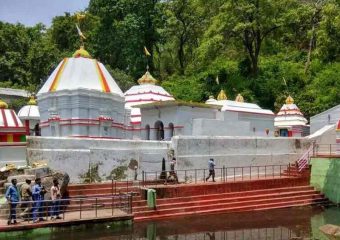
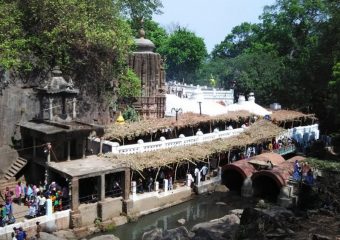
Shri Nrusinghnath is a Temple in Odisha in India which is located at the bottom of the Gandhamardana hills near Pikakamal, Baragarh. The king of Patna, Baijal Dev, had laid the foundation of this historic temple at the beginning of the 15th century.

Its height is only 45 feet, which is divided into two parts: the first is the seat of Lord Nrusinghanatha, the second is allotted to Jagmohan. The chamber has 3 gates and is supported by every 4 columns.

HISTORY:

Six hundred years ago, in the book called “Nrusingha Charitra” of Odiya, a lady Jamuna Kandhurni composed a poem that sang of the glory of Marjara keshri in respect of the oppression and suppression of the atrocities of the musician’s demon. This temple is revered with mythological history from that day. This story symbolizes the base of the monstrous viciousness of tyranny and torture which never dares to overtake and since then it is protected by Lord Nrusinghanath Marjra Keshari. According to the Chinese Traveler Huen Tsang, this place was the center of instruction in Buddhist scriptures. Lord Nrusingnath is one of the most adorable gods of Odisha and on the 14th day of the bright fortnight in the month of Vaisakha a great fair is held in his honor. According to Devanagiri and Odia inscriptions, this temple was built by BIjal Dev at the starting of the fifteenth century AD.

TOURIST:

Chal Dhar, Bhim Dhar, Sita Kunda, Panchupandab, Kapil Dhara, Supta Dhar, Satyaamb, Bhima Madua, Happy Point also you can visit here. Nursinghnath Temple is located 110 KMS west in Baragarh and 164 km from Sambalpur. The nearest railway station is Khariara road railway station. A beautiful garden is also built near the temple, where a separate avatar of Lord Krishna is shown and an image of hanuman of 28 feet is also made inside the center of the garden
Kapilash Temple

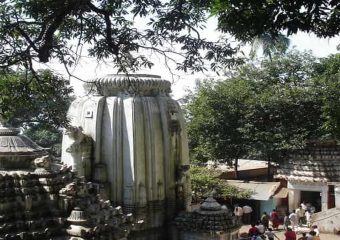
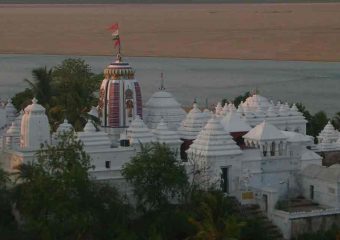
Kapilash Temple is also known as Chandrasekhar Temple. This is located in the northeast part of the Dhenkanal District, Odisha, India at a distance of 26 km from the district headquarters.

This temple is situated at an altitude of about 2239 feet above sea level. The main pillar of the temple is 60 feet long. There are two paths to the temple. One is 1352 stairs are climbing and the other is traveling by a path passing or winding across from Barabanki. Narasinghdev I, the lord of the Ganga administration, fabricated a sanctuary for Shri Chandrasekhar in 1246 CE as demonstrated in the kapilash sanctuary engraving. The Payamrta tank (Payamrta Kunda) on the left of the temple and on the right is the Marichi tank (Mirichi Kunda). There is a wooden Jagmohan in the temple. In the temple, there is shri Ganesh and Kartikeya and Ganga goddess, etc. The Patiata Pavana wind Jagannath has been installed in the temple as the Paraasa Deva. God Biswanath temple is also located in the Kapilash. According to some scholars, this temple is older than the Chandrashekhar temple that is why it is called the Buddhist Linga. Kapilash has many legends and significance. For some scholars, this tradition is the hermitage of Kapila and Kapilash is the second Kailas of Lord Shiva.

In November 2015, three ancient idols were stolen from the temple premises. The three precious idols were stolen from the famous temple entrance; they were idols of Lord Ganesha, Goddess Durga, and Goddess Bhairavi.

Nilamadhaba Temple

The Sri Nilamadhav Temple is a very ancient and famous Vishnu temple, situated on the Banks of the Mahanadi River at Kantilo. It is located near the twin hills with a surrounding forest. The steady flow of the sacred water from the feet of Lord Nillamadhav is another attraction for the site. Here lord Sidheswar is also present which another attraction of the place.

‌Lord Nilmadhava occupies a central place in the cult of Lord Jagannath. Even to this day, the temple of Lord Nilamadhav is present in the Jagannatha temple at Puri on the right side of the Lakshmi temple.

HISTORY:

All this originated in a small cave in the Brahmadari hills on the Banks of the Mahanadi River, now known as the Kantilo of Nayagarh district. Here, the local Sabara Chief Biswabasu worshipped Kitung for god was known in the Sabara dialect. According to the Parana’s, the deity was originally worshipped as an Indranila gem image, known as the “Nillamadhav”.After a long time, Darumurti is coming. The three rivers are situated near the confluence of Mahanadi, Kuanria, and Kusumi. The structure of the temple is like the Jagannath temple at Puri. It is arranged on the correct bank of Mahanadi.. This is known as the Triveni junction of Odisha. As Beni-Madhava is in Prayag, so Nila Madhava is in this place.

FESTIVALS:

Magh Saptami festival or Ratha Saptami is one of the best festivals in this place. Here a fair is organized on the Ekadashi of the month of Magha. Another festival is” PUSHA PURNIMA”. Lord Nilamedhab is decorated with gold ornaments on this occasion.

LOCATION:

‌The Kantilo is situated on the bank of the Mahanadi River in the Kendarpada block at Nayagarh district. The nearest railway station is Nayagarh city and the nearest airport is Bhubaneswar. It is 33 km far from Nayagarh bus stop and 73 km far from the state capital Bhubaneswar. It is recommended that in the event that you intend to travel via train, it is smarter to get down at Bhubaneswar station as there will be incessant transports for Kantilo. Roads are connected to Kantilo which provides regular bus Services.

Harisankar Temple

Harisankar temple situated in the slopes of the gandhamardhan hillsin the district of Balangir in Odisha in Ondia.

It is popular for its natural scenery and for its association with two Hindu gods, Vishnu and Siva. It’s such a beautiful tourist place. Every day there are lots of people coming here to visit. Here is waterfall also, that water fall attracts more people.

As a holy place, with a stream passing through the granite bed, it has given some visitors a feeling of peace. In front of the hills of Gandhamardana there is a temple of Narasimhanath. The plateau between the two temples has found ancient Buddhist ruins, considered to be the ruins of the ancient Perimalgiri University.

HISTORY:

 The god of harishankar was discovered in the 14th century by a Chauhan dynasty king of Patna state of Odisha. The goddess has been worshipped ever since. A dancing Ganesh statue has been found, which can be traced back to the beginning of the 12th century. The temple was built by the order of queen durlabha devi, then queen of king Vaijjal dev Chauhan.

LOCATION:

 It is situated in the district of Balangir of Odisha. The nearest railway station is on Harishankar road, which is only 32 km from the temple. Regular taxis are available for temple from this railway station.

FESTIVAL:

 Here all Ekadashi, Eankranti, Makar Sankranti, Shiva ratri, Megha mela festivals are celebrated.