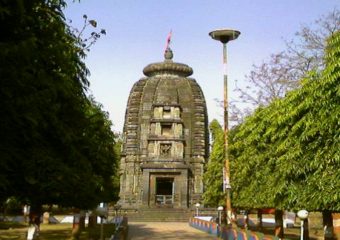
Gupteswar Cave

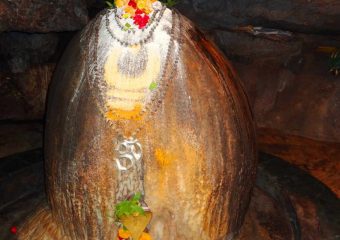
Gupteswar Cave is a Shiva-dedicated cave shrine. It is a pilgrimage destination located 55 kilometers (34 miles) from Jeypore in the Koraput District of Odisha, India. It is a limestone cave with the massive Shiva Linga as its main feature, which is supposed to be growing in size. The cave is thought to have been found by Rama and rediscovered during Maharajah Veer Vikram Dev’s rule. Devotees travel to the shrine barefooted with adorned bamboo palanquins called “Kanwadiya” and bathe in the maha kund before worshipping Lord Gupteshwar during the holy month of Shravan. The Shiva linga shrine is reached via 200 steps. It has a 3 meter (9.8 ft) wide and 2 meters (6.6 ft) high entrance.

Legend :

A 2 meter (6.6 ft) high lingam rises in the cave, surrounded by a lush grove of sal trees and bordered by the Kolab River. Because the lingam stayed undetected for such a long time, the shrine is known as “Gupteswar,” which means “God in hiding.” Climbing the 200 steps surrounded by rows of champak trees is the only way to get there. A big stalactite can be found inside the second cave. People revere it as God Kamadhenu’s (the celestial cow’s) udder, waiting beneath it with outstretched fingers to gather water drops that fall only at lengthy intervals.
This sacred site is affiliated with the Hindu divinity Lord Shri Rama and is locally known as “Gupta Kedar.” Ramagiri is the name of a local hill. According to legend, Lord Rama discovered the lingam while wandering through the Dandakaranya jungle with his wife Sita and brother Lakshman, and dubbed the deity in the cave “Gupteshwar.” In his famous Meghadutam, the poet Kalidas also portrayed the beautiful grandeur of Ramgiri forest, where the cave temple is mentioned.
However, as time passed, the temple fell into disuse, but in the 17th century, a hunter discovered the Shiva lingam and told Maharajah Veer Vikram Dev, who was the king of the region at the time and had recently relocated his capital from Nandapur to the newly formed Jeypore. The grandiosity of the gigantic lingam and the gorgeous natural environs enthralled King Veer Vikram, who paid a visit to the cave. He installed priests in the cave temple and established a ritual of making a pilgrimage to Lord Gupteswar’s cave during the holy month of Shraavana, which is still carried out by the people of the erstwhile realm. The Koraput region’s tribes and residents have venerated the lingam since then. Over 200,000 worshippers from Odisha, Andhra Pradesh, and Chhattisgarh visit Gupteswar Temple during Shivaratri (a Hindu festival). Incurable sickness patients come to worship the god and stay for months in the hope of being cured.
Manikeshwari Temple

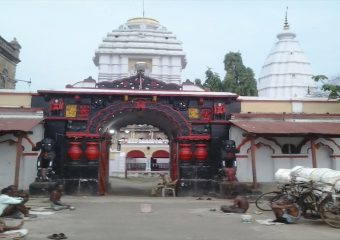
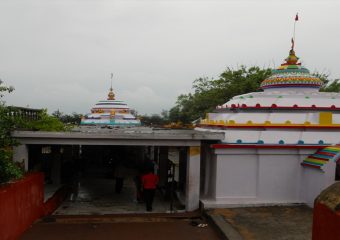
Manikeshwari Temple is located in the Odisha district of Kalahandi. The temple is situated south of Bhawanipatna. Goddess Manikeshwari is the main deity here. She is Nagavanshi Khyatriya’s, Ishta Devi. Animal sacrifice is performed at this temple during the Dussehra festival. A film is also available that depicts the animal sacrifice ritual performed in front of Goddess Manikeshwari. Karlapat, known for its charming wildlife, is close to the temple.
The modern Manikeswari temple in Bhawanipatna was built on the foundation laid by Udit Narayan Deo, and Brajamohan Deo completed it in 1947. Manikeswari has been known in Kalahandi history as Manik, the goddess of wealth, since the 10th century.
Every year, at a specific time, the Chatar yatra is held, and many individuals who have had their desires granted gather to sacrifice animals in the name of the goddess.

Ramachandi Temple

Ramachandi Temple is located on the banks of the Kusabhadra River, which runs into the Bay of Bengal, in a lovely setting. It is only 5 kilometers from Konark in Odisha’s Puri district. Some believe Goddess Ramachandi, the Konark deity, is the presiding deity of this temple, while others believe it is the temple of Mayadevi, Surya’s wife (Sun God).
The scenic magnificence of the place is a graceful Chandi seated on a Lotus flower in a small temple half-hidden by sand mounds, on the river mouth of Kushabhadra and The infinite Bay of Bengal stretched on forever, surrounded by dense Casuarina plantations. The area was inaccessible to outside visitors prior to the construction of the Marine Drive road. However, it drew a large number of local devotees in the month of Ashwina to offer sacrifices or ‘Bali.’
The lovely sight has always captivated young lovers, students, and picnickers from all over. However, since the construction of the Marine dive road, the location has become much more accessible. A regular crowd of pleasure-seekers from the state, neighboring states, and distant places visits here on a regular basis.
Ramachandi coral reef is one of India’s most prominent living coral reefs, located offshore from the Ramachandi temple.

History:
Locals are familiar with a legend about the deity. During the 17th century, a rebellious Hindu Brahmin youth, Kalapahad, who converted to Islam, vowed to demolish all Hindu temples. Kalapahad approached Ramachandi temple to destroy it after destroying the Sun temple. Then, dressed as a Maluni (a maidservant), Goddess Ramachandi asked Kalapahad to stand at the door until she brought water from the river for the Goddess. Kalapahad had been waiting for some cold water for a long time. He was exhausted when it was too late and the Maluni did not return, so he entered the temple and discovered the throne empty. Then he assumed the Maluni had taken the deity with her, and he pursued the Maluni in rage. He discovered the goddess Ramachandi floating in the middle of the Kushabhadra river as he arrived at the river’s bank. He returned without being able to reach the middle of the river because the river was overflowing at the time. Then, in the dream of a Panda (priest), Goddess Ramachandi appeared and told him to build a temple on the banks of the Kushabhadra river. This location is now known as Ramachandi. Many visitors come here throughout the year to seek the blessing of Goddess Ramachandi and to enjoy the scenic beauty of the Kushabhadra River and the Bay of Bengal.
The temple has now crumbled, leaving just the shattered walls and the empty throne. Its presiding deity is unknown because of a lack of historical data.

Kishakeshwari Temple

Kishakeshwari Temple is a Hindu Goddess Chamunda alias Kali temple in Khiching, the ancient capital of the Bhanja rulers, about 205 kilometers from Balasore and 150 kilometers from Baripada in the Mayurbhanj district of north Odisha, India.
The temple, which is formed of chlorite, has a beautiful architectural design and is well carved from the outside. This temple is one of Kalinga architecture’s most stunning structures. The temple’s style is similar to that of Bhubaneswar’s Brahmeshwara and Lingaraj temples. The temple is 100 feet (30 meters) tall and has a total space of 1,764 square feet (163.9 m2). A gigantic ten-armed frightening skeletal picture of Chamunda-Kali, with stunning veins, ribs, and sunken belly, wears a garland of skulls, and sits over a dead body, can be found in the temple.

History
The town’s main temple is devoted to Goddess Kichakeswari, the Mayurbhanj reigning chiefs’ family goddess. The Goddess Kiscakeshwari was not just the Bhanj dynasty’s ishtadevata, but also the State deity. The original temple was built in the 7th or 8th century, and it has been repaired numerous times over the ages.

The main temple welcomes visitors from 5 a.m. and closes at 10 p.m. It is, however, closed from 12 p.m. to 3 p.m.

Museum
The Khiching Museum is the state of Odisha’s second oldest museum. Several images of gods and goddesses, including images of Buddha, were discovered during an excavation by the Archaeological Survey of India in 1908. These are kept in a museum within the temple compound, which was built in 1922 by Maharaja Purna Chandra Bhanjdeo.
Durga, Ganesha, Parsvanatha, Tara, Parvati, Ardhanageswar, Vaishnavi, Nandi, Kartikeya, Avalokiteswar, Dhyani Buddha, Mahishasuramardini, Uma, Maheshwara, and female followers are among the life-size idols on display at the museum. Copper and iron utensils, terracotta figurines, seals, decorations, potteries, coins, stone tools, and numerous temple remains are among the exhibits at the museum. Several sculpted portions of old temples are on show in the museum’s courtyard.
The idols of Buddha and Avalokitesvara indicate a remarkable fusion of religion and culture. It reflects the monarchs’ polished religious tolerance, which dates back to the 10th century AD.