Bhadrakali Temple

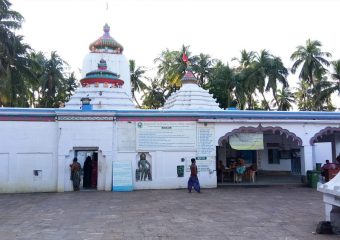
Bhadrakali Temple is in the Bhadrak district of Odisha, India, on the fringes of the revenue village Aharapada. The temple is located in the southwest of Bhadrak town, at a distance of 8 kilometers. According to popular belief, the town’s name was taken from the deity’s name.

Goddess :
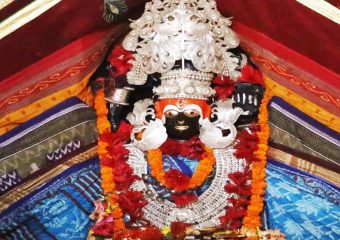
The goddess is seated in a lotus pose on a lion in a black granite statue. Every day from 6:30 a.m. to 1 p.m., and again from 3 p.m. to 9:30 p.m., the temple is open to visitors and devotees. According to the goddess’s nomenclature, it is believed that the goddess Kali is being adored in this Bhadrakali Pitha. However, because the goddess is perched on a lion, one school of thought believes she is Durga. According to mythology, a sage named Tapasa Rushi worshipped Bhadrakali inside a cave in the Meghasana hill of the Mayurbhanj region. After the sage’s death, one of his students, Bhadranatha, transported the goddess to Bhadrak’s Bhunyamahalla. The Dikshit’s relocated her to her current location to safeguard the deity from Kalapahad. Crowds assemble primarily around Vijaya Dashami and Deepavali to seek the blessings of the benevolent mother.

Biraja Temple

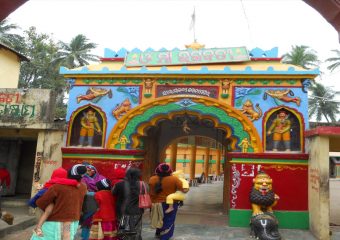
The Biraja Temple, also known as Birija Kshetra (Odia: ), is a medieval Hindu temple in Jajpur, Odisha, India, about 125 kilometers (78 miles) north of Bhubaneswar. The current temple dates from the 13th century. The temple gave Jajpur the nicknames “Viraja Kshetra” and “Biraja Peetha” after Devi Durga, who is worshipped as Viraja (Girija). The Durga idol has two hands (dwibhuja), one for spearing Mahishasura’s chest and the other for pulling his tail. One of her feet is on Mahishasura’s breast, while the other is on a lion. Like a water buffalo, Mahishasura is represented. Ganesha, a crescent moon, and a lingam are all depicted on the idol’s crown. The temple is huge and has multiple shrines dedicated to Shiva and other gods. It is known as the Viraja or Biraja kshetra, according to the Skanda Purana, and it cleanses pilgrims. Around one million Shiva lingams are said to exist in Jajpur.

In Tantra :

The hymn “Aadya Stotra” is dedicated to Shakti in the Brahmayamala Tantra. Vimala is the goddess of Puri in the hymn, while Viraja (Girija) is the goddess of the Utkala Kingdom, which later became Odisha.

Sati’s navel fell in the Utkala Kingdom, also known as “Viraja Kshetra,” according to the Tantra Chudamani. In his Ashtadasha Shakti Peetha Stuti, Adi Shankara refers to the deity as Girija. The Oddiyana Peetha (Devnagari:) is a Tantra pilgrimage site in eastern India near the Vaitarani River (an Oddiyana is an ornament worn by a woman around her navel).

Festivals and Rituals :

Sharadiya Durga Puja, which begins on the night of Krishna Paksha Ashtami, is the temple’s most important ritual. This begins on Ashwin Shukla Paksha Navami and concludes on Mahalaya. The Shodasha Dinatatmika Puja takes 16 days to complete. Simhadhwaja is the name of the Ratha (chariot festival), and its flag features a lion. An animal sacrifice, known as Bali Daanam, is done during the lunar change from Shukla Ashtami to Shukla Navami. Aparajita Puja is held during Navratri.

Nakshatra, Shravana, Prathamastami, Pana Sankranti, Raja Parva, and Navanna are some of the other festivals. The Brahmins of Jajpur worship Devi as Mahishasuramardini daily, according to Tantra and Agama traditions.

Transportation :
Cuttack and Jajpur Keonjhar Road are the closest railway stations. Regular buses to Jajpur town are available from there. In Orissa, mostly private buses run regularly. Cuttack railway station is connected by autos to Barabati bus stand, which is only 3 kilometers away. It takes 2 to 2+12 hours to get from Cuttack to Jajapur town by bus. Traveling by road from Jajpur road to Jajpur town will take more than an hour. Buses from Bhubaneswar are also available. Buses with the word “express” inscribed on them are faster than regular buses.


Bhagabati Temple (Banapur )

The temple of the goddess Bhagabati, the patron deity of the Indian town of Banapur in the state of Odisha, has gained notoriety as a religious center. Banapur was once the capital of the Sailodhvaba dynasty, which was responsible for the construction of Bhubaneswar’s early temples. The numerous Buddhist images uncovered at Banapur link the city to the Vajrayana Buddhist cult.
The Orissa High Court ordered the state government to ensure that no animal sacrifices are performed at the temple during Dussehra on October 5, 2010.

Saptamatruka Temple

Saptamatruka Temple is a Hindu temple located in Jajpur, Odisha, India. Saptamatrikas, Hindu Tantric, and Puranic Goddesses are honored at this temple.

Goddess of the President :
According to legend, these goddesses sprang from Devi Durga’s body while she was slaughtering Nishumbha and Shumbha. The matrikas reflect their respective male God’s inner willpower. Brahmani, Vaishnavi, Shivaduti or Indrani, Narasimhi, Chamunda, Kaumari, and Varahi are the Saptamatrikas.

At Present :
The rebuilt Saptamatrikas temple in Jajpur is located on the south bank of the Baitarani River. This shrine is also close to the Budha Ganesha Temple and Dashaswamedha Ghat. During the Krishna paksha Chaturdasi with Shatabhisha nakshatra in Chaitra month, people take a sacred dip. The goddesses are considered to be attendants of goddess Viraja and to safeguard the people of Jajpur regularly.

History :
The temple was in jeopardy and was eventually restored by ASI, India. The deities were installed for protection during Yajati Keshari’s Ashwamedha sacrifice. The idols’ design may be traced back to the 11th century AD. During Kala Chand’s control in Murshidabad, his forces came to destroy Hindu temples in and around Jajpur, and the Brahmins hid the Saptamatrika images in a tunnel near the Baitarani River. The images were later discovered and worshipped by Jajpur’s Utkala Brahmins.