
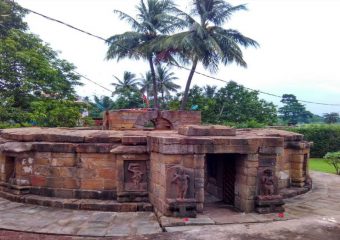
Chausath Yogini Temple (Hirapur)

Hirapur’s Chausath Yogini Temple (64-Yogini Temple), also known as Mahamaya Temple, is 20 kilometers from Bhubaneswar, the state capital of Odisha in Eastern India. It is dedicated to the worship of the yoginis, goddess-like beings who are considered auspicious.

The aspect of Religious:

The yogini temple in Hirapur is a tantric shrine with hypaethral (roofless) construction because tantric prayer rituals include worshipping the bhumandala (environment made up of all five elements of nature – fire, water, earth, air, and ether) and yoginis who are thought to be capable of flight. The yogini idols depict female figures standing on the heads of animals, monsters, or humans, symbolizing Shakti’s victory (Feminine power). Rage, grief, pleasure, joy, desire, and happiness are all expressed by the idols. In Hindu mythology, the number 64 appears in various forms, such as Klá for time, Kal for performing arts, and so on. Yogini temples can also be found in Ranipur-Jharial in Odisha’s Balangir region, as well as seven other locations in India.

History:
Queen Hiradevi of the Bramha dynasty is thought to have built the temple in the 9th century. According to local priests, the Goddess Durga took the form of 64 demi-goddesses to slay a demon at the temple. The 64 goddesses, who are equated with yoginis, begged Durga to build a temple in their honor after the battle. The Archaeological Survey of India now looks after the temple complex. Kalapahad, a 16th-century Muslim general who converted to Christianity, is said to have stormed this temple and destroyed the Murtis. He is infamous for destroying the temples of Puri and Konark.

Architecture:

The temple is modest and circular, with a diameter of only 25 feet. It’s hypaethral and made of sandstone pieces. The circular wall includes niches on the inside, each containing a Goddess statue. Sixty-six of the sixty-four black stone idols have survived. They encircle the temple’s primary figure, Goddess Kali, who stands atop a human head, symbolizing the triumph of the heart over the mind. According to some historians, the Chandi Mandapa once housed a Maha Bhairava idol. The temple appears to be built on a mandala layout, with concentric circles forming around a Shiva in the inner sanctum, who is encircled on all sides by four Yoginis and four Bhairavas. The temple’s plan has the shape of a yoni-pedestal for a Shiva lingam, with the circle accessible via a projecting entrance tunnel. Standing goddesses and their animal carriages are shown in the Yogini pictures (vahana). The Yoginis are completely naked except for their bejeweled girdles, from which hang thin skirts that serve as light ornamentation on their legs; they wear bracelets, armlets, necklaces, and anklets. The yogini images are 40 cm tall and made of dark chlorite rock, standing in various poses on plinths or vahanas, their animal vehicles; most have “delicate features and sensual bodies with slender waists, broad hips, and high, round breasts,” with varying hairstyles and body ornaments, according to scholar István Keul.
Jwalamukhi Temple

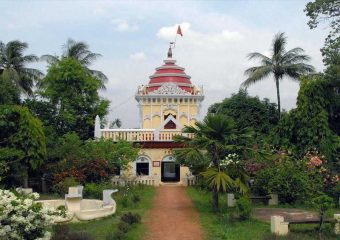
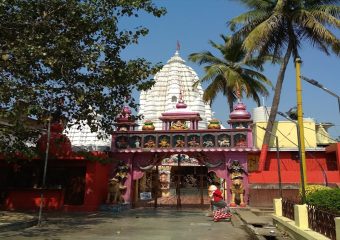
Jwalamukhi Temple is located 2.5 kilometers from the Baripada Bus Stand in the Mayurbhanj district of Odisha, India. The Temple is approximately 300-400 years old. Jwalamukhi Temple is one of Goddess Shakti’s 51 Shakti peeths dedicated to the “Goddess of Light,” also known as Goddess Jwalamukhi or the Flaming Mouth. A burning blue flame emerges from a rock chamber in this temple, and it is prayed for as a sign of the deity. Jwalamukhi Temple, though one of the most sacred Hindu temples, has a gold dome gifted by Akbar, the Mughal Emperor. The best time for tourists to visit is between the beginning of April and the middle of October, during the Navratri festival.
The Jwalamukhi fair takes place twice a year, during the Chaitra and Aswin Navratris. Devotees make their offerings around the ‘Jwala Kund,’ where the sacred fire burns. Near the Jwala Kund is the ‘Gorakh Tibbi,’ a center of the Gorakhpanthi Naths. Folk dances, songs, dramas, wrestling events, and athletics are only a few of the fair’s highlights. The biggest fair takes place at the Jwalamukhi Temple in Kangra.

Maa Pataneshwari Temple

Maa Pataneshwari Temple is a Hindu temple located in Kamlibazar, Sambalpur, Orissa. The temple is within the city limits of Sambalpur. The temple is dedicated to Maa Patneshwari, an incarnation of Goddess Kali. Goddess Patneshwari is the presiding deity of the Patna Kingdom. She is also known as the sister of Samaleswari.
Maa Patneshwari Temple was built in the late 16th century by Balram Dev ( the first Chauhan ruler of Sambalpur), in the heart of the city, formerly known as Patnagarh. The sanctum within which the deity Maa Pataneshwari is established is circular in design; the presiding deity, who is an incarnation of Goddess Kali, is very influential and plays a pivotal role among the people of Orissa.
The temple has vibrant architectural details throughout, from the entry gates to the shrine where the Goddess resides. When entering the temple, one can see the craftsmen’s meticulous work and small idols of different incarnations of the Goddess all over the entrance. More designs of mermaid-like creatures can be found on the front gate, which is symmetrical on both sides.

Ghanteshwari Temple

Maa Ghanteshwari temple is currently located in Chiplima, Odisha, India, 30 kilometers from Sambalpur via NH 6. A bridge (called the Chaurpur bridge) is being built at Mundoghat, a strategically important location between Sambalpur and Chiplima. It is fully operational as of December 2018. The distance between Maa Ghanteswari Temple and Sambalpur has been cut in half. There are bells everywhere, as the name implies. Following the fulfillment of their wishes, people offer bells to the goddess Ghanteswari, also known as the Deity of Bells. The temple attracts pilgrims from all over the state. It is known as the ‘lighthouse without light,’ as it was built by early mariners to act as a warning against strong winds. A large number of little bells hung all around adds to the significance of this location.
Maa Ghanteshwari Temple is located on the bank of the Mahanadi River, 33 kilometers (21 miles) southwest of the district capital Sambalpur. The Chipilima Hydro Powerplant (CHEP) is located on the same riverbank as the temple.