Chausath Yogini Temple (Hirapur)

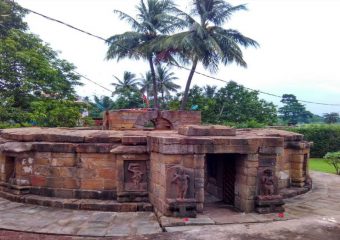
Hirapur’s Chausath Yogini Temple (64-Yogini Temple), also known as Mahamaya Temple, is 20 kilometers from Bhubaneswar, the state capital of Odisha in Eastern India. It is dedicated to the worship of the yoginis, goddess-like beings who are considered auspicious.

The aspect of Religious:

The yogini temple in Hirapur is a tantric shrine with hypaethral (roofless) construction because tantric prayer rituals include worshipping the bhumandala (environment made up of all five elements of nature – fire, water, earth, air, and ether) and yoginis who are thought to be capable of flight. The yogini idols depict female figures standing on the heads of animals, monsters, or humans, symbolizing Shakti’s victory (Feminine power). Rage, grief, pleasure, joy, desire, and happiness are all expressed by the idols. In Hindu mythology, the number 64 appears in various forms, such as Klá for time, Kal for performing arts, and so on. Yogini temples can also be found in Ranipur-Jharial in Odisha’s Balangir region, as well as seven other locations in India.

History:
Queen Hiradevi of the Bramha dynasty is thought to have built the temple in the 9th century. According to local priests, the Goddess Durga took the form of 64 demi-goddesses to slay a demon at the temple. The 64 goddesses, who are equated with yoginis, begged Durga to build a temple in their honor after the battle. The Archaeological Survey of India now looks after the temple complex. Kalapahad, a 16th-century Muslim general who converted to Christianity, is said to have stormed this temple and destroyed the Murtis. He is infamous for destroying the temples of Puri and Konark.

Architecture:

The temple is modest and circular, with a diameter of only 25 feet. It’s hypaethral and made of sandstone pieces. The circular wall includes niches on the inside, each containing a Goddess statue. Sixty-six of the sixty-four black stone idols have survived. They encircle the temple’s primary figure, Goddess Kali, who stands atop a human head, symbolizing the triumph of the heart over the mind. According to some historians, the Chandi Mandapa once housed a Maha Bhairava idol. The temple appears to be built on a mandala layout, with concentric circles forming around a Shiva in the inner sanctum, who is encircled on all sides by four Yoginis and four Bhairavas. The temple’s plan has the shape of a yoni-pedestal for a Shiva lingam, with the circle accessible via a projecting entrance tunnel. Standing goddesses and their animal carriages are shown in the Yogini pictures (vahana). The Yoginis are completely naked except for their bejeweled girdles, from which hang thin skirts that serve as light ornamentation on their legs; they wear bracelets, armlets, necklaces, and anklets. The yogini images are 40 cm tall and made of dark chlorite rock, standing in various poses on plinths or vahanas, their animal vehicles; most have “delicate features and sensual bodies with slender waists, broad hips, and high, round breasts,” with varying hairstyles and body ornaments, according to scholar István Keul.
Ratnagiri

Ratnagiri (Odia: meaning “hill of jewels”) is the location of a ruined maha vihara, which was once the most important Buddhist monastery in modern Odisha, India. It is located in the Jajpur district on a hill between the Brahmani and Birupa rivers. It is close to other Buddhist sites in the area, including Lalitagiri and Udayagiri, and is 100 kilometers (62 miles) from Bhubaneswar, the state capital, and 70 kilometers from Cuttack, the former state capital.
The Buddhist monuments were built starting in the 5th century CE and ending in the 13th century, with the peak era of activity being during the 7th and 10th centuries. The site was abandoned after the 16th century, and it is now in ruins. These were little known until the 1960s, when the Archaeological Survey of India (“ASI”) conducted significant excavation projects, revealing the site and unearthing large quantities of very excellent sculptures. “The finest in terms of carved stone decoration to have survived in India,” according to Monastery 1. Some of it was relocated to other museums, but much of it remained on site. A museum has recently opened at the location to hold many of the pieces.
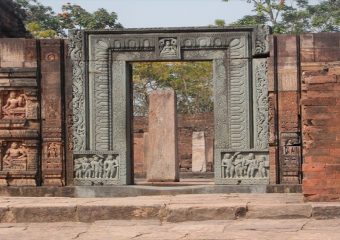
Three quadrangular monasteries, as well as a spectacular stupa (Stupa 1) encircled by hundreds of smaller stupas of varied sizes, were the key elements (Monasteries 1 to 3). Monastery 1 is the largest, with a stunning carved doorway, a large open courtyard, cells, and verandahs facing the courtyard, and a great shrine centered on a giant Buddha.
The buildings are mostly made of brick (much of which has since been removed), but the doorways, pillars, and sculptures are mostly made of two different types of stone that contrast nicely. A “blue-green chlorite and the local khondalite, a garniferous gneiss with plum-colored overtones” are involved. The majority of the stone sculptures unearthed at the site, together with a few (27) metal and brass figurines, are of the “Post-Gupta” style, with the earlier ones maintaining the classic form of Gupta art. The images are large of Buddha and the Buddhist pantheon, and examination of the topic patterns over time reveals that Ratnagiri, like Nalanda in Bihar, became a center of Tantric Buddhism. Over two dozen enormous Buddha heads, in particular, have been discovered.

Bhima Dunguri

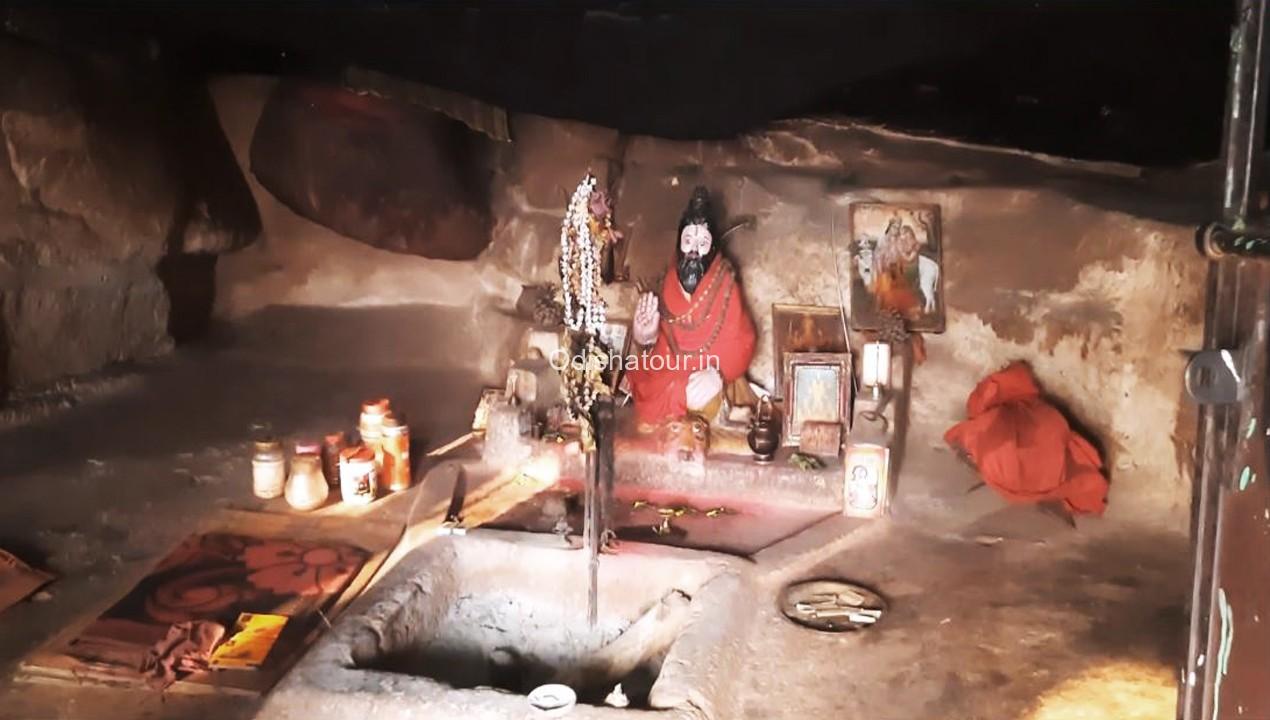
Bhima Dunguri is attributed to a particular place on the tourist map of the Balangir district as its magnificent natural abundance and beauty are surrounded by evergreen forests. Bhima Dunguri is famous for its ancient natural caves scattered in different parts of the hill area. In the spring season, the spectacular view of the region is unique and therefore, so any kind of tourist is surely mesmerized by the beautiful landscape here.

The locals here celebrate Girigovardhan Puja in the month of Kartik Purnima with much pomp and gaiety every year. On this auspicious occasion, a fair and a sikartana are organized simultaneously. Bhima Dunguri is just 28 km away Balangir is situated far away from the city under the Blocks of Devgaon. A good all-weather motorable road connected to this place from Balangir city is also. This is an excellent place for visitors coming on the weekend. Proper Hotels, Circuit Houses, IBs are available in Balangir city.

Nirmaljhar

Nirmaljhar is a perennial stream in the district of Ganjam in the Indian state of Odisha. It is situated beside the temple of Lord Vishnu. Nirmaljhar flows in the eastern ghats through the Badaghati mountain. the Princess of Khalikote Smt. Sugyani Devi has currently constituted a committee to promote Nirmaljhar as a tourist destination.
Inside the compound area, along with the Vishnu temple, there are many temples like Jagannatha, Bimala, Radhakrishna, Nilakantheswara, and Ganesa. According to history, the construction of these temples was taken up by the raja of Khalikote, the Balunkeswar Maharaj, about 1700 AD.
Nirmaljhara is situated at 19.60°N 85.066°E. It has an average height of 13 m (43 feet). There is no government place available at the site, though there is a Panth Nivas near Rambha, about 10 km. Is far away.
According to folk literature, the name Nirmaljhara is taken from the two Sanskrit / Odia words “Nirmala “which means ‘pure’ and “jhara” which means ‘stream’.
Nirmaljhar has both road and rail links Towards the north, it is 60 km from Berhampur and on the southern side, it is about 120 km from Bhubaneswar, the state capital. The nearest railway station is Khalikot station and is 9 km away from Nirmaljhara.