Ramatirtha

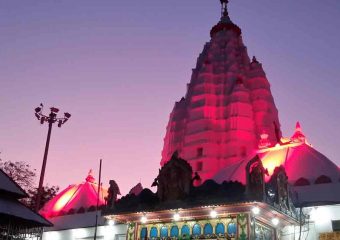
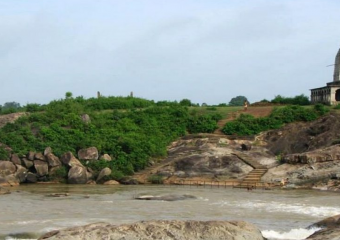
Ramatirtha is located near the city of Jashipur in the Mayurbhanj district of Odisha. Ramatirtha is situated under the Similipal National Park. This is the only crocodile rearing center in the Mayurbhanj district which attracts many tourists. The Ramatirthaa of mayurbhanj is very famous in Odisha because of its natural beauty and temple of Sri Ram.
According to Indian mythological history, in the days of Tretaya yuga, Lord Shri Rama had passed through the jungle of simiipal along with Goddess Sita and brother Laxman; While tired, Sita sat on the plateau for a while and washes her face and feet in the river flowing down. After that Ramatirthaa of Mayurbhanj became a famous place after the name of Shri Ram and Goddess Sita. Every year in Makar Sankranti (middle of January), the Mahanta people are celebrating the Tusumelana festival or Tusu Parb.

This location is 96 K.M from Mayurbhanj district headquarters Baripada,153 K.M from Balasore, 285 K.M from Bhubaneswar is far away. The place is well connected by taxis and jeeps.
Shri Nrusinghanath

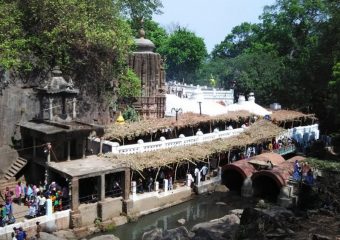
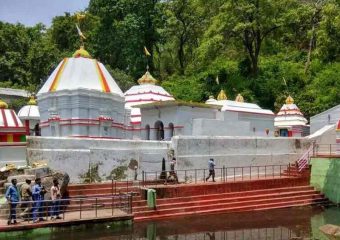
Shri Nrusinghnath is a Temple in Odisha in India which is located at the bottom of the Gandhamardana hills near Pikakamal, Baragarh. The king of Patna, Baijal Dev, had laid the foundation of this historic temple at the beginning of the 15th century.

Its height is only 45 feet, which is divided into two parts: the first is the seat of Lord Nrusinghanatha, the second is allotted to Jagmohan. The chamber has 3 gates and is supported by every 4 columns.

HISTORY:

Six hundred years ago, in the book called “Nrusingha Charitra” of Odiya, a lady Jamuna Kandhurni composed a poem that sang of the glory of Marjara keshri in respect of the oppression and suppression of the atrocities of the musician’s demon. This temple is revered with mythological history from that day. This story symbolizes the base of the monstrous viciousness of tyranny and torture which never dares to overtake and since then it is protected by Lord Nrusinghanath Marjra Keshari. According to the Chinese Traveler Huen Tsang, this place was the center of instruction in Buddhist scriptures. Lord Nrusingnath is one of the most adorable gods of Odisha and on the 14th day of the bright fortnight in the month of Vaisakha a great fair is held in his honor. According to Devanagiri and Odia inscriptions, this temple was built by BIjal Dev at the starting of the fifteenth century AD.

TOURIST:

Chal Dhar, Bhim Dhar, Sita Kunda, Panchupandab, Kapil Dhara, Supta Dhar, Satyaamb, Bhima Madua, Happy Point also you can visit here. Nursinghnath Temple is located 110 KMS west in Baragarh and 164 km from Sambalpur. The nearest railway station is Khariara road railway station. A beautiful garden is also built near the temple, where a separate avatar of Lord Krishna is shown and an image of hanuman of 28 feet is also made inside the center of the garden

Harisankar Temple

Harisankar temple situated in the slopes of the gandhamardhan hillsin the district of Balangir in Odisha in Ondia.

It is popular for its natural scenery and for its association with two Hindu gods, Vishnu and Siva. It’s such a beautiful tourist place. Every day there are lots of people coming here to visit. Here is waterfall also, that water fall attracts more people.

As a holy place, with a stream passing through the granite bed, it has given some visitors a feeling of peace. In front of the hills of Gandhamardana there is a temple of Narasimhanath. The plateau between the two temples has found ancient Buddhist ruins, considered to be the ruins of the ancient Perimalgiri University.

HISTORY:

 The god of harishankar was discovered in the 14th century by a Chauhan dynasty king of Patna state of Odisha. The goddess has been worshipped ever since. A dancing Ganesh statue has been found, which can be traced back to the beginning of the 12th century. The temple was built by the order of queen durlabha devi, then queen of king Vaijjal dev Chauhan.

LOCATION:

 It is situated in the district of Balangir of Odisha. The nearest railway station is on Harishankar road, which is only 32 km from the temple. Regular taxis are available for temple from this railway station.

FESTIVAL:

 Here all Ekadashi, Eankranti, Makar Sankranti, Shiva ratri, Megha mela festivals are celebrated.

The Samleshwari temple

The Samleshwari temple is a Hindu temple in Sambalpur in western Odisha, dedicated to the goddess known as Samleshwari, also known as the mother samlleswari (Maa Samelai), meaning mother Samleshwari.

The presiding deity of sambalpur, shri shri Samleshwari, is a strong religious force in the western part of the state of Odisha and Chhattisgarh in India.

 On the Banks of the Mahanadi River, the goddess Samleshwari is worshiped from antiquated occasions as jagatjanini, adisakti, mahalaxmi and mahasaraswati, and is the mother of the universe.

Sambalpur area is known as Hirakhanda since ancient times.

Tolemy described the place as a Samblack, according to the French explorers, Tavemir and English historian Edward Gibbon, the diamonds were exported from sambalpur to Rome.

 There is a large section of granite rock in the image of shri shri Samllei devi, with an inverted trunk – like projection below it. The image of the goddess inspires the sublime feelings of fear, fear, reverence, devotion, love and love for the universal motherhood

 The temple consists of two distinct structures. The square sanctum which establishes the deity is four steps below a covered orbit of 10 feet wide (3.0 m) supported by 12 stone pillars. On the outer wall of the sanctum are Eleven parswa devis (side Goddess) embedded, so that the devotees can perform worship of those deities through the domed orbiting pradakshina.

 The people of sambalpur worship with a great care, devotion and love to the samalei maa. Out of many festivals 3 festivals are celebrated prominently.

those are two types Navaratri puja (Continuous goddess worship for nine days) and Nuakhai (in this festival, Farmers place the first produce from their land to the goddess before using it for their own use).