Kapilash Temple

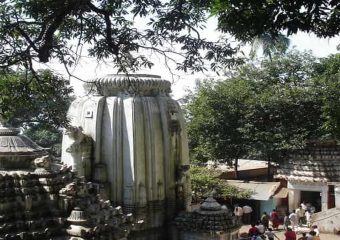
Kapilash Temple is also known as Chandrasekhar Temple. This is located in the northeast part of the Dhenkanal District, Odisha, India at a distance of 26 km from the district headquarters.

This temple is situated at an altitude of about 2239 feet above sea level. The main pillar of the temple is 60 feet long. There are two paths to the temple. One is 1352 stairs are climbing and the other is traveling by a path passing or winding across from Barabanki. Narasinghdev I, the lord of the Ganga administration, fabricated a sanctuary for Shri Chandrasekhar in 1246 CE as demonstrated in the kapilash sanctuary engraving. The Payamrta tank (Payamrta Kunda) on the left of the temple and on the right is the Marichi tank (Mirichi Kunda). There is a wooden Jagmohan in the temple. In the temple, there is shri Ganesh and Kartikeya and Ganga goddess, etc. The Patiata Pavana wind Jagannath has been installed in the temple as the Paraasa Deva. God Biswanath temple is also located in the Kapilash. According to some scholars, this temple is older than the Chandrashekhar temple that is why it is called the Buddhist Linga. Kapilash has many legends and significance. For some scholars, this tradition is the hermitage of Kapila and Kapilash is the second Kailas of Lord Shiva.

In November 2015, three ancient idols were stolen from the temple premises. The three precious idols were stolen from the famous temple entrance; they were idols of Lord Ganesha, Goddess Durga, and Goddess Bhairavi.
Nilamadhaba Temple

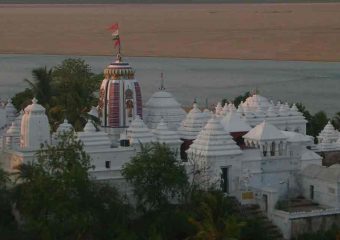
The Sri Nilamadhav Temple is a very ancient and famous Vishnu temple, situated on the Banks of the Mahanadi River at Kantilo. It is located near the twin hills with a surrounding forest. The steady flow of the sacred water from the feet of Lord Nillamadhav is another attraction for the site. Here lord Sidheswar is also present which another attraction of the place.

‌Lord Nilmadhava occupies a central place in the cult of Lord Jagannath. Even to this day, the temple of Lord Nilamadhav is present in the Jagannatha temple at Puri on the right side of the Lakshmi temple.

HISTORY:

All this originated in a small cave in the Brahmadari hills on the Banks of the Mahanadi River, now known as the Kantilo of Nayagarh district. Here, the local Sabara Chief Biswabasu worshipped Kitung for god was known in the Sabara dialect. According to the Parana’s, the deity was originally worshipped as an Indranila gem image, known as the “Nillamadhav”.After a long time, Darumurti is coming. The three rivers are situated near the confluence of Mahanadi, Kuanria, and Kusumi. The structure of the temple is like the Jagannath temple at Puri. It is arranged on the correct bank of Mahanadi.. This is known as the Triveni junction of Odisha. As Beni-Madhava is in Prayag, so Nila Madhava is in this place.

FESTIVALS:

Magh Saptami festival or Ratha Saptami is one of the best festivals in this place. Here a fair is organized on the Ekadashi of the month of Magha. Another festival is” PUSHA PURNIMA”. Lord Nilamedhab is decorated with gold ornaments on this occasion.

LOCATION:

‌The Kantilo is situated on the bank of the Mahanadi River in the Kendarpada block at Nayagarh district. The nearest railway station is Nayagarh city and the nearest airport is Bhubaneswar. It is 33 km far from Nayagarh bus stop and 73 km far from the state capital Bhubaneswar. It is recommended that in the event that you intend to travel via train, it is smarter to get down at Bhubaneswar station as there will be incessant transports for Kantilo. Roads are connected to Kantilo which provides regular bus Services.

Duduma Waterfall

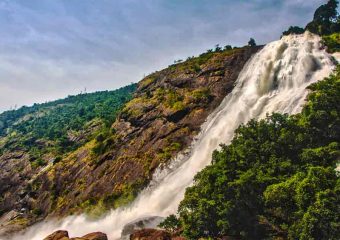
The Duduma waterfall are arranged in the limit of the Koraput (Odisha) and Visakhapatnam (Andhrapradesh) locale of India.

 The horsetail type of waterfall is of a height of 175 meters (574 feet) and formed by the river Machhkund. It has two subs – streams, one towards Odisha and the other towards Andhra Pradesh. The Duduma is around 92 km from Koraput and around 177 km from Visakhapatnam is far away.

This machhakunda is a pilgrimage. Near this waterfall are the aboriginal tribe of bonda, gadabas and parja are lived.

Machhakunda hydroelectric project is situated near Duduma waterfall. This is a collaborative project between government of Odisha and the government of Andhra Pradesh. The installed capacity of the project with six units is 120 MW.

Nalabana Bird Sanctuary

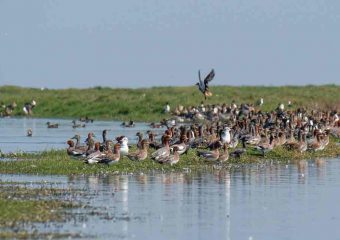
The Nalabana bird sanctuary, or Nalbana Island, is an area of marshy land in Chilika Lake, named Ramsar. It was pronounced a bird safe-haven under the Wildlife Protection Act in 1972. Thousands of birds descend in the migratory season at the center of the park. After the monsoon, the island disappears because it comes in contact with water again after the monsoon.

 Nalaban means a weed – laden island in the Odia language. It is a prominent island at the center of lake with an area of 15.53 km 2 (6.00sq miles). During the monsoon season, the island gets completely submerged. When the winter monsoon is less, the level of the lake decreases and the island is slowly open, the wide number of birds flocks to its surface on a wide variety of issues. Nalbana was notified in 1987 and declared a bird sanctuary under the wildlife protection act 1973.

Many types of birds are found here, including rare birds. The rare birds found in the lake are Asiatic dowitchers(NT), dalmatian pelicans (VU), pallas’s fish – eagles (VU), very rare migrant spoon – bill sandpipers (CR) and spot – billed pelicans(NT). The white – bellied ocean hawk, outsider kite, brahminy kites, kestrel, swamp harriers, and the world’s most far and wide flying predator, peregrine bird of prey, are seen here.  Along with the changing beaches of the lake and islands, too many small – footed noisy birds are seen in a narrow band. These include plovers, collar pratincole, ruff, dunlins, snips and sandpiper. Larks, wagtails, and lappings are also found on moderates. The long-footed avocets, the stilt and the godwits feeding in to the deep waters.

The high vegetation areas of the lake support moorhens, coots and jacanas. With kingfisher and rollers, the herons of the pond can be seen along the coasts and nocturnal herons. Small eras are seen on the walls around the lake, small herds of the brahminy duck are also seen in compact herds of the brahminy duck, as well as shovellers, pintails, gadwall, blue-greens, pochards, geese and fogies.

The nesting colonies of the Ganges, billed turn and river tern are found on the island of Nalbana. In 2002, the Bombay Natural History Society recorded 540 horses of the Indian River turn on the island of the largest Southeast Asia nest.