Hirakud Dam

Hirakud dam is built in India about 15 kilometres (9 miles) from Sambalpur in the state of Odisha on the Mahanadi .There is a lake which is 55 km (34 miles) long behind the dam, Hirakud reservoir. It is one of the first major multipurpose river valley projects launched after independence of India.

 In June 1947, Hirakud dam project report was submitted to the government. Jawaharlal Nehru had placed the first batch of concrete on 12 April 1948.

 In the Mahanadi River upper drainage basin concentrated on the Chhattisgarh plain, the periodic drought is in contrast to the situation in the lower delta region where flood can damage crops. DAMS were constructed to help reduce these problems by creating a reservoir and controlling the flow of river through drainage system. The dam controls the flow of Mahanadi and produces hydroelectric power through many hydro – electric plants.

The dam helps in controlling the floods in the Mahanadi delta and irrigates the land of 75,000 km 2 (19×106 acres). Hydro electricity is also generated. The Hirakud dam controls 83,400 km 2 (20.6 × 10⁶ acres) of the Mahanadi drainage by controlling the reservoir has a storage capacity of 8.136 km3 (1.952 cubic miles) of 5.818 km3 (1.396 cubic miles) with a gross of 8.136 km3

It flows into an area of 133,090 km 2 (32.89 × 10⁶ acres), which is more than twice the area of Sri –Lanka.

 This project provides irrigation to 1,556 km 2 (384,000 acres) of kharif and 148,000 acres of rabi in sambalpur, bargarh, bolangir and subarnpur districts. The water left by the power plant is irrigated the CCA of 4,360 km 2 (1.08×10⁶ acre) in the mega river delta. On the right side of the dam, in burla, two power plants and 22 km (14 miles) from the dam to the bottom of the dam can generate electricity in 307.5 mw. Besides, the project provides flood protection in the 9,500 km 2 (2.3×10⁶ acre) delta areas in Cuttack and Puri district.

 Chiplima gained prominence as the second hydroelectric project in the Hirakud dam. The natural decline of Mahanadi River from 80 to 120 feet (24 to 37 m) is used for generating electricity. This place is inhabited by a large number of fishermen whose goddess Ghantashwari is worshipped in the neighbouring area. The state livestock breeding farms and agricultural farms are located here.

 Hirakud dam has three canals, namely the bargarh main canal, the sason canal and sambalpur canal. The bargarh main canal has a discharge rate of 4,000 cubic feet per second (110 m3 / s).

Later, water from the Hirakud dam was allotted to various industries, mainly for mineral processing and coal – based thermal power plants in the districts of Jharsuguda and Sambalpur.

 The main purpose of the hirakud dam was to stop the heavy flood which was affecting a large part of coastal Odisha. But, the construction of the dam deeply affected the original inhabitants of the western part of Odisha. The Hirakud project affected about 150,000 people and about 22,000 families migrated.

Now that place is a tourist place of Odisha
The Samleshwari temple

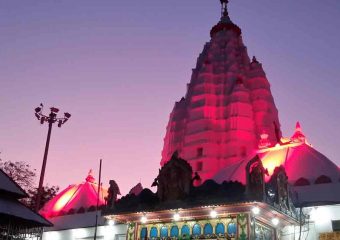
The Samleshwari temple is a Hindu temple in Sambalpur in western Odisha, dedicated to the goddess known as Samleshwari, also known as the mother samlleswari (Maa Samelai), meaning mother Samleshwari.

The presiding deity of sambalpur, shri shri Samleshwari, is a strong religious force in the western part of the state of Odisha and Chhattisgarh in India.

 On the Banks of the Mahanadi River, the goddess Samleshwari is worshiped from antiquated occasions as jagatjanini, adisakti, mahalaxmi and mahasaraswati, and is the mother of the universe.

Sambalpur area is known as Hirakhanda since ancient times.

Tolemy described the place as a Samblack, according to the French explorers, Tavemir and English historian Edward Gibbon, the diamonds were exported from sambalpur to Rome.

 There is a large section of granite rock in the image of shri shri Samllei devi, with an inverted trunk – like projection below it. The image of the goddess inspires the sublime feelings of fear, fear, reverence, devotion, love and love for the universal motherhood

 The temple consists of two distinct structures. The square sanctum which establishes the deity is four steps below a covered orbit of 10 feet wide (3.0 m) supported by 12 stone pillars. On the outer wall of the sanctum are Eleven parswa devis (side Goddess) embedded, so that the devotees can perform worship of those deities through the domed orbiting pradakshina.

 The people of sambalpur worship with a great care, devotion and love to the samalei maa. Out of many festivals 3 festivals are celebrated prominently.

those are two types Navaratri puja (Continuous goddess worship for nine days) and Nuakhai (in this festival, Farmers place the first produce from their land to the goddess before using it for their own use).

Barabati Fort

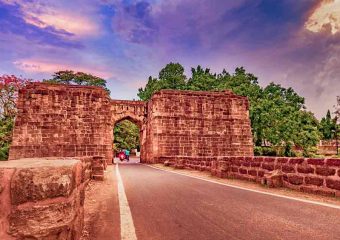
The Barabati Fort is the thirteenth century fort. It built by the rulers of the East Ganga dynasty in Cuttack, Odisha, India. The ruins of the fort are built with its ditch, gate and mud mound of the nine – story palace, refreshing the memories of the past. Today, it is located next to the modern Barabati Stadium which is a place for various sports events and cultural events. The presiding deity of the city farther than the fort is also a temple dedicated to cuttack candi. Now, the old Gadakhai  plans to develop boating facility and a world class tourist destination with world class parks.  The work of restoring of gadkhai is in progress.

LOCATION:

It is located on the head of the delta formed by the Mahanadi River in the north and its distribution at the central point of the ridge about 8 km from the Centre of the ridge. In the south the story duo is located at an elevation of 14.62 m from the sea level.

HISTORY:

Scholars have given different opinions regarding the date of construction of the Barabati fort. The Madalpanji, the Jagannath temple chronicle narrates an interesting story that follows.

King Anangbhim Dev III of East Ganga dynasty lived in his capital square Choudwar (1211-1238), one day he crossed the Mahanadi and came to the south. Here he saw in the Barabati village in the Ko-danda circle that a heron had jumped a hawk near the god Visweswara. This surprised the king and the foundation for the construction of the fort was laid on an auspicious day and the village was named Barbati Cuttack. And then they left the Choudwar and lived in Cuttack and made it their capital.

 In 1568 AD, the city fell into the hands of the Karrains of Bengal, then in 1576 the Mughal Empire and again in the hands of the Maratha Empire in 1741. Cuttack, along with the rest of Odisha, came under the British rule in 1803.In 1919 the Bengal – Nagpur Railways joined from madras (Chennai ) and Calcutta (Kolkata).It became the capital of the newly formed state of Odisha in 1936 and remained the same till 1948 when capital was shifted to Bhubaneswar. In 1989 this city completed one thousand years of its existence.

During the rule of Muslims and Marathas, this remained the capital of Odisha On October 1803, the British army took over the Barabati fort and became a prison for the capture of many of the glorious rulers of the country. In 1818 the king of Kujunga, the king of Suragaja was kept in a severe prison with the members of his family. Apart from this, vandalism was intensified to destroy the fort in the early stages of British rule.

ARCHTECTURE:

 It is spread over an area of 102 acres and is surrounded by a 10m stone hard trench on all sides, Width 20m on the northern and western sides, Width in the eastern and southern sides.The entire fort wall is missing except the entrance. In view of its national significance since 1915, this site has been declared as a guarded site by the archaeological Survey of India. There was a high mound with a tank on the western side at the center of the fort. It is spread over 15/16 acre area. Now there is widespread encroachment on the site.On the east of the mound is the imperial mosque, while on the west of the pond is the center of Hajrat Ali Aukhari.

In 1989, the Archaeological Survey of India carried out digging to find out the cultural horizon of the historical fort and work is still in progress.The archaeological survey of India taken out on December 1, 1989 showed evidence of a castle, a rectangular structure made of the Khondalite stone.It was prepared in an area that had been carefully filled with sand and lime mixture at a depth of 5 meters. The trenches excavated in the eastern part of the structure show that 32 pillars are made of literate blocks, which are different in size but broad but square.

The remains of a temple have been found in the north – east corner of the mound. Digging the eastern and southern portions of the mound revealed the existence of a citadel made up of laterite blocks

The ruins of the old Barabati fort are located on the right bank of Mahanadi on the western side of the city. All the remains of the fort are an arched entrance and a mud mound of the nine – story palace. Archaeology surveys show that the fort was more rectangular in structure than 102 acres (0.41 km 2) and was surrounded by a wall of sandstone and laterite.There is a tank in the west of the mound. The remains of a temple in the north -eastern corner of the mound. The temple was built of sandstone on the foundation of laterite blocks. By now, around four hundred pieces of mouldings and some mutilated pieces of sculpture have been recovered.

This temple of the Ganga with a stone – idol of Lord Jagannath is in ruins. As late as 1719 A mosques built by Nawab Murshid Quli Khan, the governor of Emperor Aurangzeb, still remains present.

PHENI-KHAJA

This is one of famous prasad of Lord Jagannath chhapan bhog, in odisha puri temple, its taste was heavenly, it’s very crisp, not too sweet, and u can even store it.

INIGREDIENTS:

PURPOSE FLOUR, BUTTER, SALT, SUGAR, WATER, GREEN CARDAMOM POWDER, RICE FLOUR,OIL(FOR FRYING)

PROCEDURE:

  1.  Mix thoroughly with flour, 4 tablespoons of ghee, salt in a cup for cooking. Add cold water to make the smooth but stiff dough. Cover the dough and let it sit for at least 15 to 20 minutes.
  2. To make a smooth paste, mix 3 tablespoons of ghee and rice flour. Put it aside.
  3.  Meanwhile, add sugar and water to a pan and prepare the syrup. Cook until it reaches a boil and it is still sticky. We need 1 string stability. Add the cardamom powder. Add a slice of lemon to this syrup, avoiding the crystallization of sugar. Turn off heat. Cover the syrup to keep it warm.
  4. Divide the flour into equal portions. Take a ball and round it with a ball. Stick to all the balls. Do not roll too thin.
  5. Make the dough about 1mm thick, roll the vine into a rented or square bun.
  6. Paste the above paste on the bun evenly.
  7.  Now take the roti the vine in the roll
  8. Cut the log into 1 inch pieces and prepare it for 4 to 5 inches long pheni or khaja
  9. Heat oil in a pan and 2 to 3 pheni or khaja fry at a time.
  10. Bring to a simmer very low. In this process,pheni or khaja will also recover from the side.
  11.  Put aside from oil. Now pour the food into the syrup and place it on a colander.
  12.  For soft pheni you can soak the syrup.
  13.  Store the khaja in an airtight container by cooling.