The Samleshwari temple

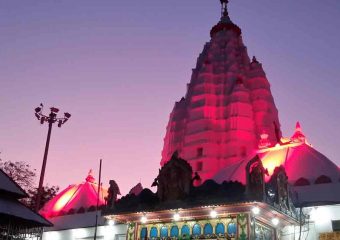
The Samleshwari temple is a Hindu temple in Sambalpur in western Odisha, dedicated to the goddess known as Samleshwari, also known as the mother samlleswari (Maa Samelai), meaning mother Samleshwari.

The presiding deity of sambalpur, shri shri Samleshwari, is a strong religious force in the western part of the state of Odisha and Chhattisgarh in India.

 On the Banks of the Mahanadi River, the goddess Samleshwari is worshiped from antiquated occasions as jagatjanini, adisakti, mahalaxmi and mahasaraswati, and is the mother of the universe.

Sambalpur area is known as Hirakhanda since ancient times.

Tolemy described the place as a Samblack, according to the French explorers, Tavemir and English historian Edward Gibbon, the diamonds were exported from sambalpur to Rome.

 There is a large section of granite rock in the image of shri shri Samllei devi, with an inverted trunk – like projection below it. The image of the goddess inspires the sublime feelings of fear, fear, reverence, devotion, love and love for the universal motherhood

 The temple consists of two distinct structures. The square sanctum which establishes the deity is four steps below a covered orbit of 10 feet wide (3.0 m) supported by 12 stone pillars. On the outer wall of the sanctum are Eleven parswa devis (side Goddess) embedded, so that the devotees can perform worship of those deities through the domed orbiting pradakshina.

 The people of sambalpur worship with a great care, devotion and love to the samalei maa. Out of many festivals 3 festivals are celebrated prominently.

those are two types Navaratri puja (Continuous goddess worship for nine days) and Nuakhai (in this festival, Farmers place the first produce from their land to the goddess before using it for their own use).

Barabati Fort

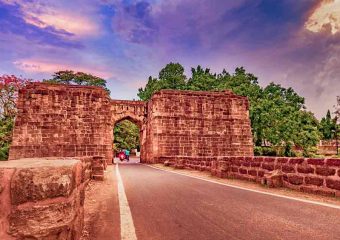
The Barabati Fort is the thirteenth century fort. It built by the rulers of the East Ganga dynasty in Cuttack, Odisha, India. The ruins of the fort are built with its ditch, gate and mud mound of the nine – story palace, refreshing the memories of the past. Today, it is located next to the modern Barabati Stadium which is a place for various sports events and cultural events. The presiding deity of the city farther than the fort is also a temple dedicated to cuttack candi. Now, the old Gadakhai  plans to develop boating facility and a world class tourist destination with world class parks.  The work of restoring of gadkhai is in progress.

LOCATION:

It is located on the head of the delta formed by the Mahanadi River in the north and its distribution at the central point of the ridge about 8 km from the Centre of the ridge. In the south the story duo is located at an elevation of 14.62 m from the sea level.

HISTORY:

Scholars have given different opinions regarding the date of construction of the Barabati fort. The Madalpanji, the Jagannath temple chronicle narrates an interesting story that follows.

King Anangbhim Dev III of East Ganga dynasty lived in his capital square Choudwar (1211-1238), one day he crossed the Mahanadi and came to the south. Here he saw in the Barabati village in the Ko-danda circle that a heron had jumped a hawk near the god Visweswara. This surprised the king and the foundation for the construction of the fort was laid on an auspicious day and the village was named Barbati Cuttack. And then they left the Choudwar and lived in Cuttack and made it their capital.

 In 1568 AD, the city fell into the hands of the Karrains of Bengal, then in 1576 the Mughal Empire and again in the hands of the Maratha Empire in 1741. Cuttack, along with the rest of Odisha, came under the British rule in 1803.In 1919 the Bengal – Nagpur Railways joined from madras (Chennai ) and Calcutta (Kolkata).It became the capital of the newly formed state of Odisha in 1936 and remained the same till 1948 when capital was shifted to Bhubaneswar. In 1989 this city completed one thousand years of its existence.

During the rule of Muslims and Marathas, this remained the capital of Odisha On October 1803, the British army took over the Barabati fort and became a prison for the capture of many of the glorious rulers of the country. In 1818 the king of Kujunga, the king of Suragaja was kept in a severe prison with the members of his family. Apart from this, vandalism was intensified to destroy the fort in the early stages of British rule.

ARCHTECTURE:

 It is spread over an area of 102 acres and is surrounded by a 10m stone hard trench on all sides, Width 20m on the northern and western sides, Width in the eastern and southern sides.The entire fort wall is missing except the entrance. In view of its national significance since 1915, this site has been declared as a guarded site by the archaeological Survey of India. There was a high mound with a tank on the western side at the center of the fort. It is spread over 15/16 acre area. Now there is widespread encroachment on the site.On the east of the mound is the imperial mosque, while on the west of the pond is the center of Hajrat Ali Aukhari.

In 1989, the Archaeological Survey of India carried out digging to find out the cultural horizon of the historical fort and work is still in progress.The archaeological survey of India taken out on December 1, 1989 showed evidence of a castle, a rectangular structure made of the Khondalite stone.It was prepared in an area that had been carefully filled with sand and lime mixture at a depth of 5 meters. The trenches excavated in the eastern part of the structure show that 32 pillars are made of literate blocks, which are different in size but broad but square.

The remains of a temple have been found in the north – east corner of the mound. Digging the eastern and southern portions of the mound revealed the existence of a citadel made up of laterite blocks

The ruins of the old Barabati fort are located on the right bank of Mahanadi on the western side of the city. All the remains of the fort are an arched entrance and a mud mound of the nine – story palace. Archaeology surveys show that the fort was more rectangular in structure than 102 acres (0.41 km 2) and was surrounded by a wall of sandstone and laterite.There is a tank in the west of the mound. The remains of a temple in the north -eastern corner of the mound. The temple was built of sandstone on the foundation of laterite blocks. By now, around four hundred pieces of mouldings and some mutilated pieces of sculpture have been recovered.

This temple of the Ganga with a stone – idol of Lord Jagannath is in ruins. As late as 1719 A mosques built by Nawab Murshid Quli Khan, the governor of Emperor Aurangzeb, still remains present.

Rajarani Temple

Rajarani Temple is a Hindu temple of the eleventh century, which is situated in Bhubaneswar, the capital of Odisha (Orissa ), India.

First, this temple was called Indreswara. It is privately known as an “adoration temple” in light of the suggestive carvings of ladies and couples in the temple. Rajarani Temple is worked in the Pancha Ratha style on a raised stage with two constructions: a focal holy place called the vimana (sanctum) with a bada (curvilinear tower) over its rooftop ascending to a stature of 18 m (59 ft), and a review lobby called Jagamohana with a pyramidal rooftop. The temple was developed of dull red and yellow sandstone privately called “Rajarani”. There are no pictures inside the sanctum, and thus it isn’t related to a particular faction of Hinduism yet extensively named Saivite dependent on the specialties.

Different history specialists place the first development date between the eleventh and twelfth hundreds of years and have set it generally having a place with the similar period as the Jagannath Temple at Puri. The engineering of different temples in focal India is accepted to have begun with this temple, the remarkable ones being the Khajuraho temples and Totesvara Mahadeo temple in Kadawa. There are different figures in the dividers around the temple, and the vimana, portraying scenes of the marriage of Shiva, Nataraja, Parvati, and incorporate tall, slim, complex nayikas in different jobs and states of mind like diverting their head from a starved austere, stroking her youngster, holding a part of the tree, taking care of her latrine, investigating a mirror, removing her anklet, touching her pet bird and playing an instrument. Rajarani Temple is kept up by the Archeological Survey of India (ASI) as a tagged (pay to enter) landmark.

History

Given the sculptural structural style, the temple is dated to the mid-eleventh century. Earthy colored gatherings the temple alongside Anant Vasudev Temple and spots it around the eleventh twelfth hundreds of years. Panigrahi, who did a complete examination of Orissan temples, gives an undefined date between Lingaraj Temple and Mukteswara Temple. Fergusson accepts development of the temple was started around 1105. George Michell accepts the temple was worked during a similar time as Lingaraja Temple. Rajarani Temple generally has a place with a similar period as the Jagannath Temple at Puri. The design of different temples in focal India began from this temple. The remarkable ones in the classification are the Khajuraho sanctuaries and the Totesvara Mahadeo temple in Kadawa. Researchers accept dependent on the style that the temple may have been worked by Somavamsi lords who moved from Central Indis to Orissa during the period. Rajarani temple is kept up by the Archeological Survey of India (ASI) as a tagged landmark.

lingaraj temple

The Lingaraja temple is a Hindu temple where lord shiva is worshiped. It is one of the oldest temples of Bhubaneswar, the capital of Odisha. The temple is the most prominent place of Bhubaneswar city is an alternate tourist attraction station of the state.

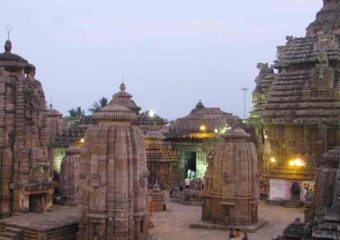
The Lingaraja temple is the biggest temple of Bhubaneswar. This temple is built by the Somavamshi dynasty of king Yayati. This temple is at a height of 55m. It’s built with a mixture of Deula, Jagamohan, Nata Mandira, Bhoga Mandap. There are many small temples on the premises of the temple and enclosed by a large compound wall.

The temple is dynamic in love rehearses, dissimilar to most different sanctuaries in Bhubaneswar, and Shiva is loved as Harihara, a joined type of Vishnu and Shiva. The sanctuary has pictures of Vishnu, perhaps on account of the rising noticeable quality of the Jagannath order exuding from the Ganga rulers who constructed the Jagannath Temple in Puri in the twelfth century. The focal divinity of the sanctuary, Lingaraja, is venerated both as Shiva and Vishnu. The agreement between the two groups of Hinduism, Shaivism, and Vaishnavism, is found in this sanctuary where the divinity is revered as Harihara, a joined type of Vishnu and Shiva.

Lingaraja temple is kept up by the Temple Trust Board and the Archaeological Survey of India (ASI). The temple has a normal of 6,000 guests each day and gets lakhs of guests during celebrations. Shivaratri festival is an important festival to be celebrated in the temple and during 2012, I saw 200000 in the morning. The temple compound isn’t available to non-Hindus; however, there is a review stage next to the divider offering a decent perspective on the primary outsides. This was initially raised for a little while by Lord Curzon when Viceroy.

History

Lingaraja, in a real sense, implies the ruler of Lingam, the famous type of Shiva. Shiva was initially revered as Kirtivasa and later as Harihara and is ordinarily alluded to as Tribhuvaneshwara (additionally called Bhubaneswar), the expert of three universes, in particular, paradise, earth, and the underworld. His associate is called Bhuvaneshvari.

The temple in its current structure traces back to the most recent decade of the 11th century. There is proof that a piece of the temple was worked during the 6th century CE as referenced in a portion of the seventh century Sanskrit messages. Fergusson accepts that the temple may have been started by Lalat Indu Keshari who ruled from 615 to 657 CE. The assembly hall ( JagaMohan ), while the hall of offering (Bhoga Mandap) was constructed during the twelfth century. The Nata Mandira was worked by the spouse of Salini somewhere in the range of 1099 and 1104 CE. When the Lingaraja temple was developed, the Jagannath (type of Vishnu) organization had been filling around there, which antiquarians accept, is proven by the concurrence of Vishnu and Shiva love at the temple. The rulers of the Ganga line were vigorous devotees of Vaishnavism and fabricated the Jagannath Temple at Puri in the twelfth century.

According to certain records, the temple is accepted to have been worked by the Somavamshi lord Yayati I(1025-1040), during the eleventh century CE. One of the Somavamsi sovereigns gave a town to the temple and the Brahmins connected to the temple got liberal grants. An engraving from the Saka year 1094 (1172 CE) demonstrates the blessings of gold coins to the temple by Rajaraja II. Another engraving of Narasimha I from the eleventh century demonstrates the offer of beetle leaves as tabula to the managing god.

K.C. Panigrahi refers that Yayti I had no ideal opportunity to assemble the sanctuary and it ought to have been started by his children Ananta Kesari and Udyaokt Kesari (different name of Yayati also). The contention gave against the view is that is his frail replacements couldn’t have built a particularly brilliant construction.

Some episodic records show that the temple was dispatched by the king of Gauda Sashanka (passed on c. 637 CE)

Festival and worship practices

According to Hindu legend, an underground stream starting from the Lingaraja sanctuary fills the Bindusagar Tank (which means sea drop) and the water is accepted to mend physical and otherworldly disease. The water from the tank is in this way treated holy and travelers take a heavenly plunge during bubbly events. The focal divinity of the sanctuary, Lingaraja, is loved both as Shiva and Vishnu. The congruity between the two organizations of Hinduism, Shaivism, and Vaishnavism, is found in this sanctuary where the divinity is revered as Harihara, a joined type of Vishnu and Shiva.

Shivaratri is the fundamental celebration praised yearly in Phalgun month when a huge number of lovers visit the temple. Aside from an entire day of fasting, bel leaves are offered to Lingaraja on this propitious day. The primary festivals occur around evening time when fans implore throughout the evening. The ardent ordinarily break their quick after the Mahadipa (an immense light) is lit on the tower of the temple. This celebration honors Lingaraja having killed an evil spirit. A great many Bol Bom travelers convey water from waterway Mahanadi and walk right to the temple during the period of Shravana consistently. Sunan day is seen from regal occasions in the period of Bhandara, a day when temple workers, laborers, and different holders of temple lands offer dedication and recognition for Lingaraja. Candan Yatra (Sandalwood function) is a 22-day celebration celebrated in the temple when workers of the temple disport themselves in an extraordinarily made barge in the Bindusagar tank. The divinities and workers of the temples are blessed with sandalwood glue to shield them from heat. Moves shared banquets, and fun is masterminded by individuals related to the temple.

Consistently the chariot celebration (Ratha-Yatra) of Lingaraja is praised on Ashokashtam. God is taken in a chariot to Rmeswar Deula. A huge number of lovers follow and pull splendidly beautified chariots containing the symbols of Lingaraja and his sister Rukmani.

The Lingaraja temple is dynamic in love rehearses, not at all like the other antiquated temples of Bhubaneshwar which are not dynamic love places. Non-Hindus are not permitted inside the temple, however, it tends to be seen from the review stage situated external the sanctuary. The review stage and the rear of the temple can be reached through a line way situated to one side of the fundamental passage of the temple. The sacredness of the temples is kept up by forbidding canines, unbathed guests, bleeding ladies, and families that experienced birth or passing in the first 12 days. If there should be an occurrence of an unfamiliar trespass, the temple follows a purging custom and unloading of prasad (food offering) in a well.